
 Refrigerator Repair
 Dishwasher Repair
 Washer Repair
 Dryer Repair
 Oven Repair
 Stove/Cooktop Repair
 Freezer Repair
 Appliance Installation
 Samsung
 Bosch
Bosch
 Thermador
 Miele
Miele
 Sub Zero
 Bloomberg
 Asko
Asko














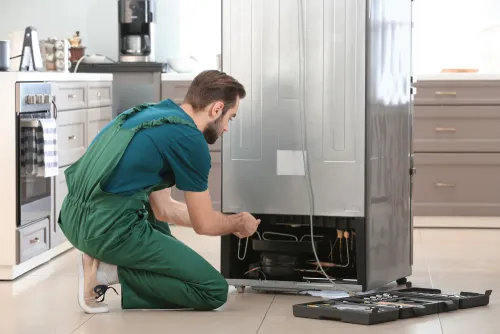
Marathon Appliance Repair Services
Your Local Marathon Appliance Repair Company
- Marathon compact refrigerator not cooling
- Marathon chest freezer not freezing
- Marathon upright freezer heavy frost buildup
- Marathon compressor start relay failure
- Marathon fridge door gasket worn or torn
- Marathon refrigerator running too warm or too cold
- Marathon cold-control thermostat failure
- Marathon compact washer won’t drain
- Marathon combo washer/dryer not heating
- Marathon 24″ electric range element not heating

Article Reviewed & Technically Verified by Dmitry V., Lead EPA-Certified Technician (15+ Years Experience)
Marathon is a Canadian value brand of compact and apartment-sized appliances — mini and apartment refrigerators, chest and upright freezers, 24″ and 30″ electric ranges, and space-saving laundry. Because most of these units run on mechanical cold-control thermostats and simple switches rather than digital displays, faults are diagnosed by testing components, not by reading an error code. Brooklyn Appliance Repair NYC provides same-day Marathon service across Brooklyn.
Our Happy Customers




- 15+ Years Experience
- Warranty on Parts & Labour
- 100% client satisfaction
- Skilled Technicians
Our Marathon Appliance Repair Services
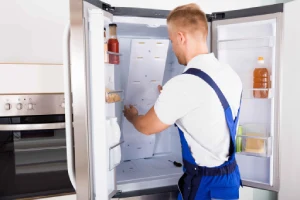
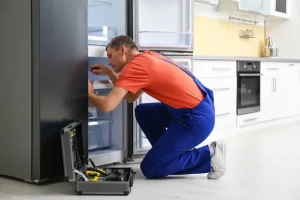
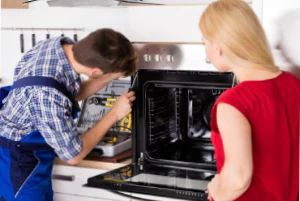
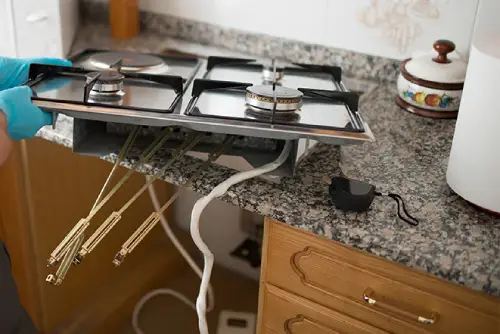
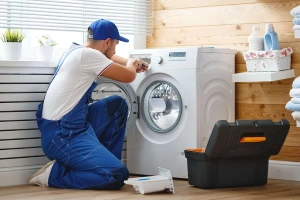
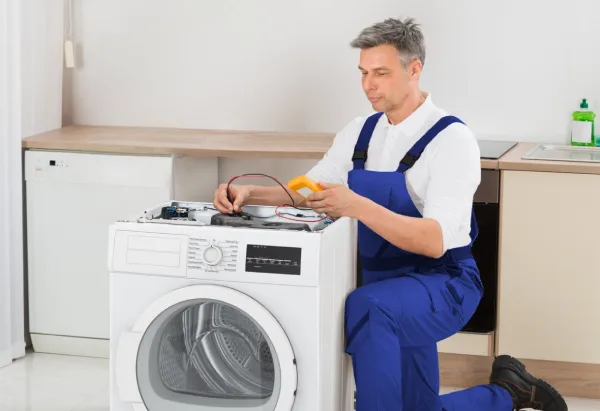
Marathon builds affordable, apartment-scaled appliances for kitchens, basements, garages, and rental units. The trade-off for that low price is simplicity: fewer sealed-system safeguards, mechanical thermostats instead of inverter boards, and single-belt drive laundry. That design shapes how we diagnose every Marathon fault — and, on the lowest-cost units, whether a repair is worth more than a replacement. We tell you honestly which way the math falls before any work begins.
Marathon Refrigerator Repair
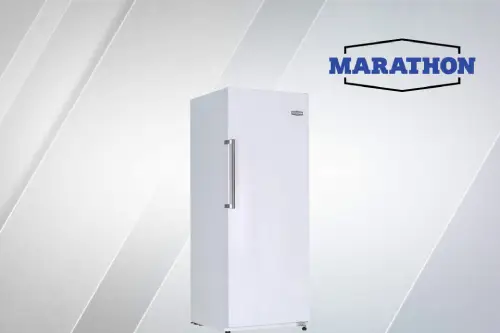
Marathon refrigerators — from the 4.4 cu.ft. MAR46W apartment all-fridge to the 20.8 cu.ft. MFF208WFD French-door and the MFF212BLS convertible — use a single compressor and, on many models, a manual cold-control thermostat rather than a digital board. When a Marathon fridge stops cooling, the cause is usually the cold-control, the compressor start relay and overload, or a condenser fan — not a control-board code.
We test each of those components directly and check the door gasket seal, because a compact cabinet loses temperature fast through a worn gasket. Any work on the sealed refrigerant circuit is handled under EPA Section 608 certification.
Common issues we fix:
- Not cooling or cabinet running warm
- Compressor hums or clicks but won’t start
- Frost buildup on frost-free models
- Water pooling under the crisper
- Door not sealing, condensation at the gasket
- Running too cold and freezing produce
Marathon Chest & Upright Freezer Repair
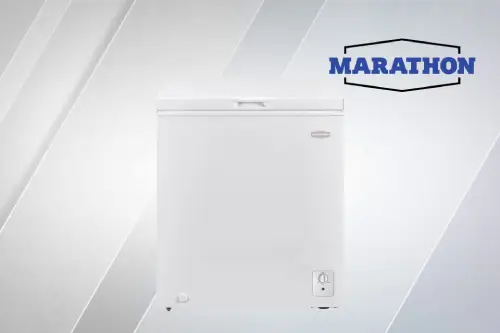
Chest and upright freezers are Marathon’s signature line — the MCF200W 20 cu.ft. chest and the MUFF97BLS 9.7 cu.ft. upright are common in Brooklyn garages and basements. These are manual-defrost or basic frost-free units with no diagnostic display, so a freezer that runs constantly but won’t hold temperature points to the start relay and overload protector, the defrost thermostat, or a compressed door gasket.
We measure compressor winding resistance, test the start components, and confirm the gasket seals a flat lid before condemning the sealed system. On a low-cost chest model we’ll tell you plainly if a compressor replacement costs more than a new unit.
Common issues we fix:
- Not freezing or weak freezing
- Runs constantly without holding temperature
- Heavy frost or ice sheets
- Lid or door not sealing
- Clicking start relay, then silence
- Won’t run after a power surge
Marathon Range & Oven Repair
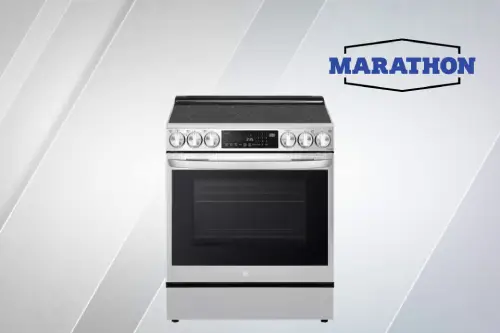
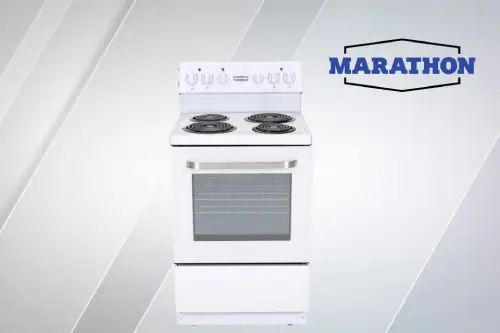
Marathon builds 24″ and 30″ electric ranges — coil-element and Schott Ceran glass-top models. Because the oven is thermostat-controlled rather than sensor-and-board driven, a Marathon oven that won’t reach temperature almost always has a failed bake element or an out-of-spec oven thermostat.
We test the bake and broil elements for continuity, verify the thermostat against a calibrated thermometer, and check the terminal block, which is a common failure point on compact electric ranges. These are electric units, so there is no gas igniter or gas valve to service.
Common issues we fix:
- Oven not heating or slow to preheat
- Bakes too hot or too cold
- Broil element not working
- Oven shuts off mid-bake
- Indicator light stays on or dead
- Burnt terminal block or scorched wiring
Marathon Cooktop & Stove Repair
The cooktop on a Marathon electric range uses either exposed coil elements or a Schott Ceran radiant glass surface. When one element won’t heat, the fault is normally the surface element itself or its infinite switch — the same components we test on any electric cooktop and stove.
We check element resistance, test the infinite switch through its range, and inspect the receptacle block that coil elements plug into. On glass-top models we assess cracked or pitted Ceran and advise whether the surface is safe to keep using.
Common issues we fix:
- One or more elements won’t heat
- Element stuck on high, no low setting
- Cracked or pitted Ceran glass surface
- Loose or arcing coil receptacle
- Indicator lights not working
- Knobs or infinite switches unresponsive
Marathon Washer Repair
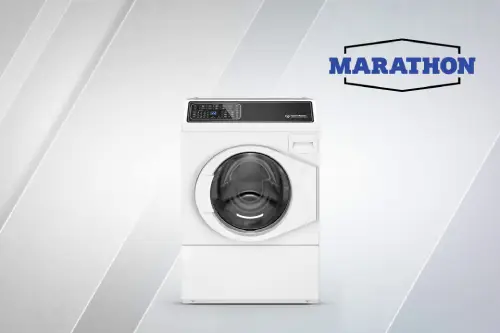
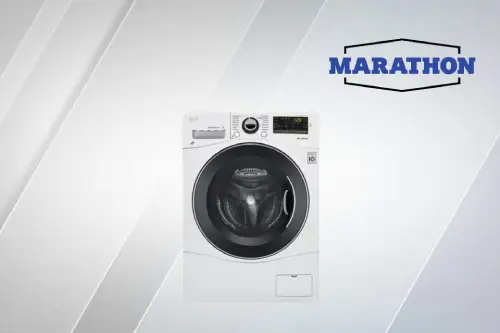
Marathon’s compact laundry — the 24″ front-load washer and the Model X 240V combo washer/dryer — is built for apartments where a full-size machine won’t fit. When one of these washers won’t fill, drain, or spin, we work through the mechanical chain: water inlet valve, drain pump, door lock, and drive belt or coupler.
We test the inlet valve coils for continuity, run the drain pump directly to check for a seized impeller, and confirm the door interlock before the machine will spin. Because the Model X combines washing and drying, we also verify its heater circuit — see our dryer repair section for the drying side.
Common issues we fix:
- Won’t drain or won’t spin
- Fills slowly or won’t fill
- Leaking from the door boot or pump
- Door won’t lock or won’t open
- Excessive shaking on spin
- Stops partway through the cycle
Marathon Dryer Repair
Marathon’s drying is handled by the Model X combo unit, which dries on the same drum it washes in. When a compact Marathon dryer tumbles but won’t heat, we test the heating element, thermal fuse, and cycling thermostat — the standard failure points on any electric dryer.
If the drum won’t turn, we check the drive belt and motor. Restricted venting is the most common cause of long dry times on a combo unit, so we confirm airflow before replacing any heating component.
Common issues we fix:
- No heat or insufficient heat
- Takes far too long to dry
- Drum won’t tumble
- Stops mid-cycle or won’t start
- Overheating or burning smell
- Loud thumping or squealing
How We Diagnose Marathon Appliances Without Error Codes
Most Marathon units have no digital display or fault-code readout, so diagnosis is done by testing physical components against their expected behavior. The tables below show how we trace a reported symptom to its actual cause. We cross-reference each model’s specifications against Marathon’s official owner documentation before ordering any part.
Refrigeration — Fridges & Freezers
| Symptom | How We Diagnose |
|---|---|
| Cabinet warm, compressor not running | Test cold-control thermostat for continuity through its range; check for voltage reaching the compressor. |
| Compressor clicks then stops | Test the start relay and overload protector; measure compressor start/run winding resistance. |
| Runs constantly, weak cooling | Check condenser/evaporator fan operation and airflow; inspect door gasket seal and compression. |
| Heavy frost on a frost-free model | Test defrost thermostat and defrost heater continuity; verify the defrost cycle advances. |
| Condensation or warm spots at the door | Inspect gasket for tears and set; check lid/door alignment and hinge closure. |
Compact Laundry & Electric Ranges
| Symptom | How We Diagnose |
|---|---|
| Washer won’t fill | Test water inlet valve coils for continuity; verify water pressure and check the door interlock. |
| Washer won’t drain or spin | Run the drain pump directly for a seized impeller; inspect the drive belt or coupler and door lock. |
| Dryer tumbles but no heat | Test heating element, thermal fuse, and cycling thermostat for continuity; confirm vent airflow. |
| Oven won’t reach temperature | Test bake element continuity; verify oven thermostat against a calibrated thermometer. |
| One cooktop element won’t heat | Test surface element resistance and the infinite switch; inspect the coil receptacle block. |
Technician Case Studies — Marathon Repairs

Diagnostic & Resolution: Compressor drew high amperage then cut out on the overload. Tested the start relay — open circuit. Replaced the start relay and overload protector; verified pull-down to freezing and steady compressor run current.
Diagnostic & Resolution: Cold-control thermostat showed no continuity in any position. Confirmed the compressor and relay were healthy by bypassing the thermostat. Replaced the cold-control thermostat and verified the cabinet held set temperature.
Diagnostic & Resolution: Defrost thermostat tested open at cold temperature, stalling the defrost cycle. Replaced the defrost thermostat and heater assembly, cleared the evaporator frost, and confirmed the defrost cycle advanced on the next run.
Diagnostic & Resolution: Door gasket had a compressed, torn section near the lower hinge letting warm air in. Replaced the door gasket, verified even seal with a paper-pull test around the perimeter, and confirmed temperature recovery.
Diagnostic & Resolution: Ran the drain pump directly — impeller seized on lint and debris. Replaced the drain pump, confirmed full drainage on a test cycle, and verified the heater circuit for the drying phase.
Diagnostic & Resolution: Tested the element — open circuit; infinite switch passed voltage correctly. Inspected the receptacle block for arcing, replaced the surface element, and confirmed full heat range on all positions.
Frequently Asked Questions — Marathon Appliance Repair
What Marathon appliances do you repair?
My Marathon fridge has no error display — how do you diagnose it?
Is there a warranty on Marathon repairs?
Is it worth repairing a low-cost Marathon appliance?
How much does Marathon appliance repair cost?
Address
Brooklyn, NY 11238
Manhattan, Staten Island
Appliance Repair
Payment Options