
 Refrigerator Repair
 Dishwasher Repair
 Washer Repair
 Dryer Repair
 Oven Repair
 Stove/Cooktop Repair
 Freezer Repair
 Appliance Installation
 Samsung
 Bosch
Bosch
 Thermador
 Miele
Miele
 Sub Zero
 Bloomberg
 Asko
Asko














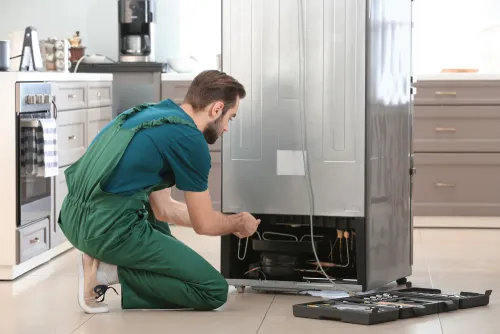
Inglis Appliance Repair Services
Your Local Inglis Appliance Repair Company
- Inglis top-load washer won’t spin or agitate
- Inglis washer LF / F8E1 long-fill fault
- Inglis dryer no heat / thermal fuse open
- Inglis dryer AF restricted-airflow warning
- Inglis washer Sud excessive-suds fault
- Inglis refrigerator running constantly, warm box
- Inglis electric range bake element not heating
- Inglis dishwasher not draining or cleaning
- Inglis lid switch / drive belt failure
- Inglis control board (F01) failure

Article Reviewed & Technically Verified by Dmitry V., Lead EPA-Certified Technician (15+ Years Experience)
Inglis is a Canadian heritage brand, now Whirlpool Canada’s value line — built on Whirlpool laundry, range, and refrigeration platforms. Newer Inglis units share Whirlpool fault codes such as F8E1/LF (long fill) and Sud, while older electromechanical models carry none. Brooklyn Appliance Repair NYC services both generations across Brooklyn, same-day.
Inglis is best known for laundry — top-load and front-load washers and electric dryers — plus a large installed base of ranges, dishwashers, and refrigerators built on Whirlpool platforms. Because the brand shares its engineering with its parent, replacement parts are sourced through the Whirlpool platform, which is also why our Whirlpool appliance repair techs already know these machines inside out. Whether your unit is a 1990s belt-drive workhorse or a current Whirlpool-built model, we diagnose the real fault instead of swapping parts on a guess.
Our Happy Customers





- 15+ Years Experience
- Warranty on Parts & Labour
- 100% client satisfaction
- Skilled Technicians
Our Inglis Appliance Repair Services
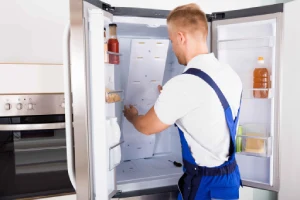
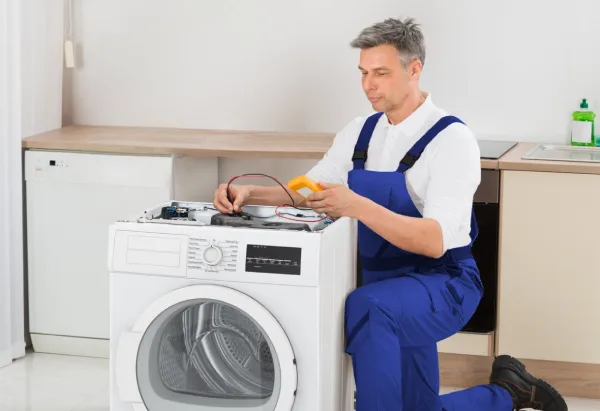
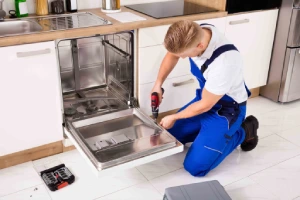
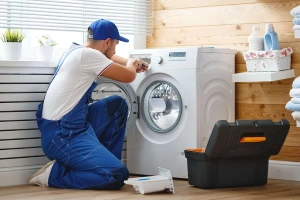
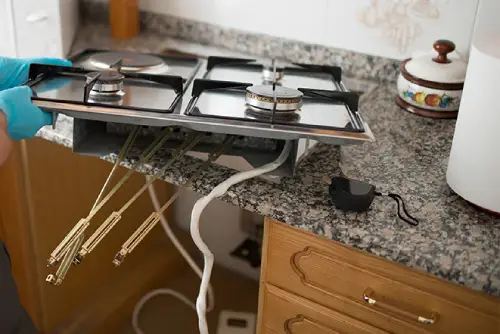
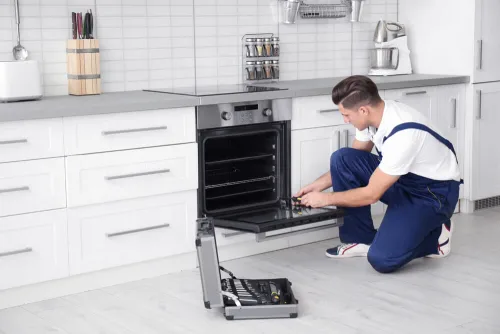
Inglis Fridge Repair
Inglis refrigerators are Whirlpool-platform top-freezer and side-by-side units, so a warm fresh-food compartment usually traces to a defrost fault, a failed evaporator fan, or a stuck adaptive-defrost control rather than the compressor itself. We read evaporator frost patterns, check defrost heater continuity, and test the thermistor before condemning a sealed-system part.
Sealed-system work — a restricted capillary or a leaking evaporator — requires EPA Section 608 certified recovery, which our technicians hold. We separate a true sealed-system failure from the far more common defrost and airflow problems so you aren’t sold a compressor you don’t need.
Common issues we fix:
- Fresh-food side warm, freezer still cold
- Refrigerator runs constantly
- Heavy frost on the back evaporator panel
- Water pooling under the crisper drawers
- Ice maker not filling or overfilling
- Loud evaporator or condenser fan noise
- Door gasket not sealing, sweating cabinet
- Interior light or control problems
Inglis Dryer Repair
Inglis electric dryers such as the YIED4671EW run on a simple, durable Whirlpool drive train. When they stop heating, the fault is almost always a specific component — an open heating element, a blown thermal fuse, or a tripped high-limit thermostat — which we confirm with a continuity test rather than replacing parts by elimination.
Newer touch-control models display Whirlpool fault codes like F01 and the AF restricted-airflow warning; we bring those exact parts to the first visit. We also service gas dryers, where the igniter, flame sensor, and gas valve coils are checked before any part is quoted.
Common issues we fix:
- No heat or clothes still damp after a cycle
- Takes far too long to dry
- Won’t start or stops mid-cycle
- Burning smell or overheating
- Loud thump, squeal, or scraping drum
- Drum not turning
- AF / Check Vent airflow warning
- Control board (F01) faults
Inglis Dishwasher Repair
Inglis dishwashers share the Whirlpool tall-tub design, where dirty dishes or standing water usually point to a worn wash pump, a clogged filter and chopper, or a failed drain pump rather than the control. We test each pump individually and check the spray-arm feed before recommending a part.
Older Inglis models are electromechanical with a timer rather than a fault display, so we diagnose by symptom and direct testing — verifying fill valve flow, float switch action, and heater continuity to find the real cause.
Common issues we fix:
- Not draining / standing water in the tub
- Dishes come out gritty or filmy
- Won’t fill or overfills
- Leaks from the door or pump seal
- No heat / poor drying
- Stops mid-cycle or won’t advance
- Spray arms not turning
- Door latch or float-switch problems
Inglis Washer Repair
Inglis top-load washers like the ITW4671EW1, ITW4871FW, and ITW4880HW are the brand’s best-known product. When one won’t spin or agitate, we test the lid switch, drive belt, motor coupling, and clutch directly — the classic wear points on this Whirlpool-built platform — rather than assuming a board failure.
Fill and drain faults show up as the Whirlpool LF/F8E1 long-fill or Sud excessive-suds codes on newer units. We check inlet-valve flow and screens, clear the drain path, and confirm the fix on a full test cycle so the fault doesn’t return.
Common issues we fix:
- Won’t spin or won’t agitate
- Won’t drain, clothes left soaking
- Fills slowly / LF long-fill fault
- Leaking from the inlet valve or pump
- Loud banging or walking on spin
- Lid won’t lock (LdL) on newer models
- Excessive suds (Sud)
- Won’t start or stops mid-cycle
Inglis Cooktop Repair
Inglis electric cooktops use coil or radiant surface elements wired through an infinite-switch control. When a surface element won’t heat or stays on high, the fault is usually the element, the receptacle block, or the infinite switch — each of which we test individually for continuity and resistance.
On smoothtop models we assess the radiant element and its limiter before quoting glass or element work, so you get an honest picture of what the repair actually involves.
Common issues we fix:
- Surface element won’t heat
- Element stuck on high, no control
- Uneven or weak heating
- Burned or corroded element receptacle
- Infinite switch or knob not responding
- Cracked glass (assessment and options)
- Element sparking or tripping the breaker
- Indicator light stays on
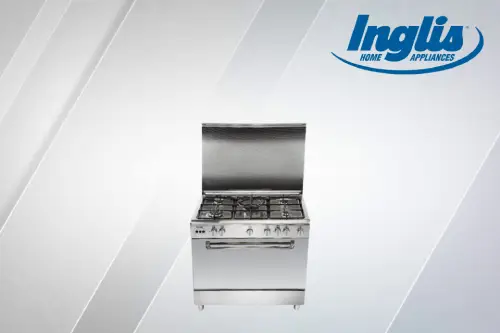
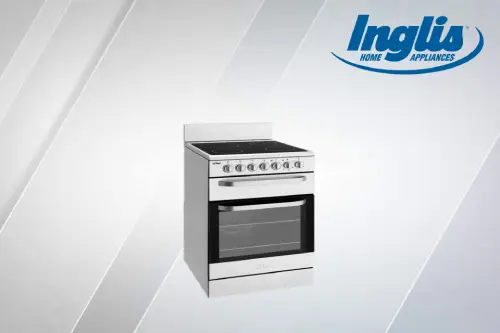
Inglis Stove & Range Repair
Inglis ranges come in both electric and gas. Most installed units are electromechanical with no fault display, so we diagnose a dead oven or an uneven burner by testing components directly — bake and broil element continuity, the oven thermostat or sensor, and on gas models the igniter and safety valve.
Gas work is handled with the burner and safety valve verified before the range is returned to service. Electric ranges get a temperature-calibration check with a thermocouple after any heating part is replaced.
Common issues we fix:
- Bake or broil element not heating
- Oven runs hot or cold vs. the setting
- Surface burner won’t light (gas)
- Weak or uneven flame (gas)
- Range won’t power on
- Control knobs or switches not working
- Igniter clicks but won’t light
- Sparking or tripping the breaker
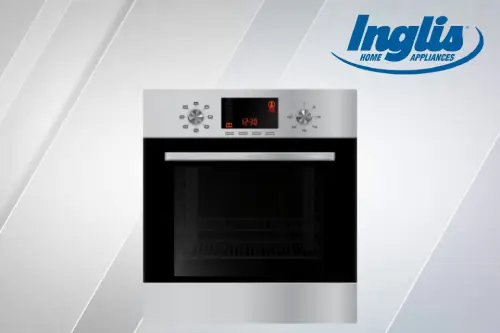
Inglis Oven Repair
Inglis ovens that underbake or overbake almost always have a drifted oven sensor or a worn bake element rather than a control problem. We measure the sensor’s resistance against spec (a Whirlpool-platform RTD reads roughly 1,080 ohms at room temperature) and verify actual cavity temperature with a calibrated thermocouple.
Self-clean latch faults, broil-element failures, and door-gasket wear are checked as part of the same visit, so the oven is confirmed accurate before we finish rather than left for a second call.
Common issues we fix:
- Not heating or very slow to preheat
- Bakes too hot or too cold
- Broil element not working
- Oven shuts off mid-bake
- Self-clean won’t start or door won’t unlock
- Temperature drifts over a long bake
- Door won’t seal or close
- Display or control panel faults (newer models)
Inglis Washer & Dryer Error Codes
Because newer Inglis laundry units are built on Whirlpool platforms, they display the same fault codes as their Whirlpool siblings. The tables below list the codes we confirm most often — per Inglis’s official troubleshooting documentation, some codes are model-specific, so have your exact model and code ready when you call. Older electromechanical Inglis units display no codes and are diagnosed by symptom (see the diagnostic tables further down).
Inglis Top-Load Washer Codes (Whirlpool platform)
| Code | Meaning |
|---|---|
| F8E1 / LF / Lo FL | Washer is taking too long to fill (long fill) |
| Sud | Excessive suds detected |
| LdL | Lid is not locking |
| LdU | Lid cannot unlock |
| Ofb / OL | Load out of balance / load too large |
| HC | Hot and cold inlet hoses reversed |
| PF | Cycle interrupted by a power failure |
Inglis Dryer Codes (Whirlpool platform)
| Code | Meaning |
|---|---|
| AF | Restricted airflow / Check Vent |
| F01 | Main electronic control board fault |
| F22 / F23 | Exhaust thermistor open or shorted |
| F28 / F29 | Moisture sensor open or shorted |
| L2 | Low line voltage detected |
| PF | Power failure interrupted the cycle |
Older Inglis Units — Symptom to How We Diagnose
Electromechanical Inglis refrigerators and ranges don’t display codes, so diagnosis is done by testing components against the symptom. Here is how our technicians work through the most common calls.
Inglis Refrigerator Diagnostics
| Symptom | How We Diagnose |
|---|---|
| Fresh food warm, freezer cold | Check evaporator fan, damper, and air path before the sealed system |
| Runs constantly, heavy frost | Test defrost heater, bimetal, and adaptive-defrost control continuity |
| Not cooling at all | Verify compressor start components; EPA 608 sealed-system check |
| Water under crispers | Clear the defrost drain and inspect the drain-pan routing |
Inglis Range & Oven Diagnostics
| Symptom | How We Diagnose |
|---|---|
| Oven won’t heat | Continuity-test bake element and verify 240V at the terminals |
| Bakes hot or cold | Check oven sensor/thermostat, confirm with a calibrated thermocouple |
| Gas burner won’t light | Test igniter draw and the safety valve before replacing parts |
| Surface element stuck on | Inspect the infinite switch and element receptacle block |
Technician Case Studies — Inglis Repairs

Diagnostic & Resolution: Measured inlet-valve flow — both screens partially blocked with sediment and the hot solenoid weak. Cleaned inlet screens and replaced the water inlet valve. Confirmed a full fill in under 4 minutes with no code recurrence over two cycles.
Diagnostic & Resolution: Continuity-tested the heating element (open) and found the thermal fuse blown from a lint-restricted vent. Replaced the element and thermal fuse, cleared the vent run, and verified exhaust temperature rise on a timed-dry test.
Diagnostic & Resolution: Tested the lid switch — open at close — and found a worn drive belt slipping under load. Replaced the lid switch and drive belt, then confirmed full spin and a balanced final extraction.
Diagnostic & Resolution: Power-cycled at the breaker per procedure — code returned within one cycle. Confirmed the main electronic control board had failed and replaced it. Ran three full cycles with no recurrence and all sensor readings in range.
Diagnostic & Resolution: Continuity-tested the bake element — open circuit — and confirmed 240V present at the terminals. Replaced the bake element and verified cavity temperature within ±10°F of the set point using a calibrated thermocouple.
Diagnostic & Resolution: Found non-HE detergent in use and a partially clogged drain hose slowing extraction. Cleared the drain path, ran a clean-washer rinse, and advised HE detergent dosing. Cycle time and drainage returned to normal with no code on retest.
Frequently Asked Questions — Inglis Appliance Repair
What Inglis appliances do you repair?
Do Inglis appliances use the same error codes as Whirlpool?
Is there a warranty on Inglis repairs?
What Inglis problems do you fix most often?
How much does Inglis appliance repair cost?
Address
Brooklyn, NY 11238
Manhattan, Staten Island
Appliance Repair
Payment Options