 Refrigerator Repair
 Dishwasher Repair
 Washer Repair
 Dryer Repair
 Oven Repair
 Stove/Cooktop Repair
 Freezer Repair
 Appliance Installation
 Samsung
 Bosch
Bosch
 Thermador
 Miele
Miele
 Sub Zero
 Bloomberg
 Asko
Asko














Garland Appliance Repair Services
Your Local Garland Cooking Equipment Repair Company
- Garland range standing pilot won’t stay lit
- Garland oven thermostat running hot or cold
- Garland burner flame low, yellow, or uneven
- Garland spark igniter not lighting the burner
- Garland flame-failure safety valve shutting off gas
- Garland griddle not holding set temperature
- Garland oven pilot or igniter failure
- Garland burner valve stiff, leaking, or seized
- Garland electric range element not heating
- Garland burner lights then goes out on release

Article Reviewed & Technically Verified by Dmitry V., Lead EPA-Certified Technician (15+ Years Experience)
Garland builds only professional cooking equipment — heavy-duty gas and electric ranges, ovens, griddles, broilers, and salamanders — and makes no refrigerators, dishwashers, washers, or dryers. Brooklyn Appliance Repair NYC services Garland cooking units, including pro-style ranges installed in homes, across Brooklyn, diagnosing standing-pilot ignition, flame-failure safety valves, and drifting oven thermostats.
Our Happy Customers

- 15+ Years Experience
- Warranty on Parts & Labour
- Gas & Electric Ranges
- Skilled Technicians
Our Garland Appliance Repair Services
Garland is a cooking-only brand, so we scope our service to exactly what Garland makes: gas and electric ranges, commercial and convection ovens, griddles, rangetops, and broilers. We do not claim to repair Garland refrigeration or laundry, because Garland does not build those categories.
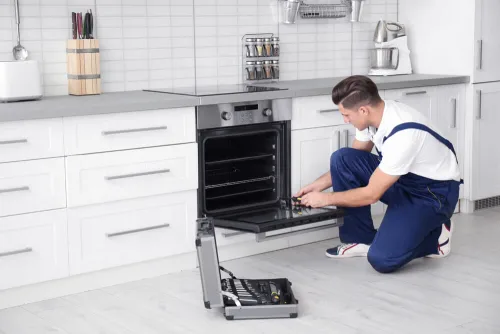
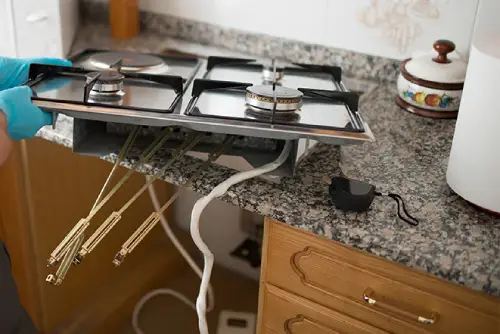
Garland Range Repair
Garland restaurant ranges — the G Series (G24, G36, G48 widths), the electric-ignition GFE line, US Range U-Series open-burner ranges, and the heavier Master Series — are robust electromechanical units, not code-driven appliances. When a Garland gas range or rangetop misbehaves, the fault is almost always in the pilot, thermocouple, burner valve, or manifold pressure, so we test those directly instead of chasing a display.
On standing-pilot models we measure thermocouple millivolt output at the flame-failure safety valve; on electric-ignition GFE ranges we check the spark electrode and ignition module. Pro-style Garland ranges installed in Brooklyn homes get the same commercial-grade diagnosis as a restaurant line.
Common issues we fix:
- Standing pilot won’t stay lit
- Burner lights then drops out when knob is released
- Spark igniter clicks but no flame
- Low, yellow, or uneven burner flame
- Burner valve stiff, seized, or leaking gas
- Electric range element not heating
- Cracked grates, burner caps, or knobs
- Gas smell at the manifold (shut off and call)
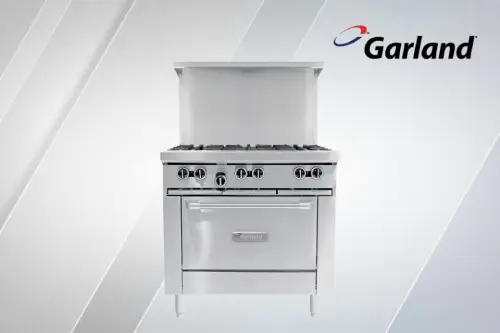
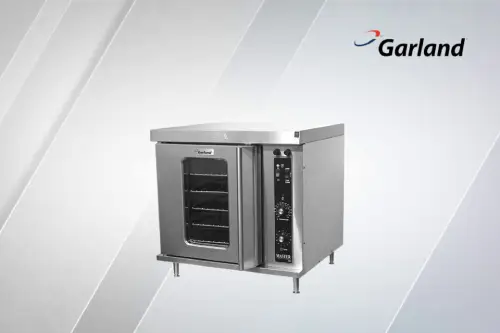
Garland Oven Repair
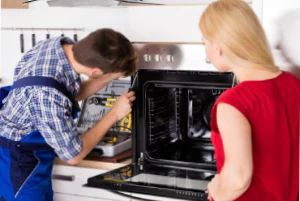
Garland range ovens, Space Saver ovens, and convection ovens hold temperature through a thermostatic gas valve (or an electronic control and RTD on electric models) rather than a fault-code system. When a Garland oven bakes hot, bakes cold, or won’t light, we compare actual cavity temperature to the dial with a calibrated thermocouple before condemning any part.
Uneven baking often traces to a worn oven thermostat, a failing convection fan motor, or a door gasket letting heat escape. We check the pilot or oven igniter, the safety valve, and the burner orifice so the oven relights reliably and holds its setpoint.
Common issues we fix:
- Oven runs hot or cold versus the dial
- Oven pilot or igniter won’t light
- Oven lights then shuts off (safety valve)
- Slow or no preheat
- Uneven baking or hot spots
- Convection fan not running
- Door won’t seal or hinges sag
- Electric oven element not heating
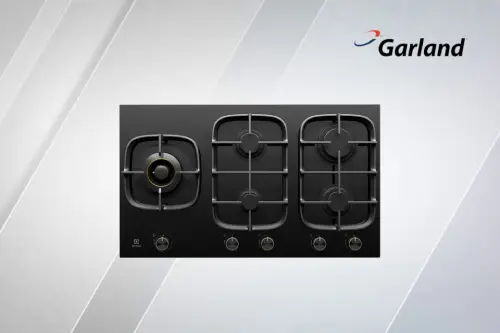
Garland Griddle & Cooktop Repair
Garland thermostatic griddles, rangetops, and broilers see the hardest, most continuous use of any cooking surface, and their thermostats, burner valves, and orifices wear accordingly. We service Garland griddle plates and open-burner tops, testing each thermostat against a surface probe rather than swapping parts by guess.
A Garland griddle that scorches on one end or won’t reach temperature usually has a drifted thermostat or a partially blocked burner orifice. On broilers and salamanders we check the pilot, safety valve, and burner spud so heat output returns to spec.
Common issues we fix:
- Griddle not holding or reaching set temperature
- Uneven heat across the plate
- Broiler or salamander burner won’t light
- Thermostat drifted out of calibration
- Burner orifice blocked or flame weak
- Pilot outage on a griddle or broiler section
- Gas valve stiff or leaking
- Cracked knobs or damaged burner grates
Garland Symptoms — How We Diagnose Them
Most Garland cooking equipment is electromechanical, with standing-pilot or spark ignition and thermostatic gas valves — there is usually no digital fault code to read. Instead of a code dictionary, our technicians work from the symptom back to the failed component, following the sequence in Garland’s official gas range service documentation. The table below shows how we isolate the fault.
| Symptom | How We Diagnose It |
|---|---|
| Standing pilot won’t stay lit | We measure thermocouple millivolt output at the flame-failure safety valve and check the pilot orifice and air shutter; a weak thermocouple or clogged pilot drops the flame. |
| Burner lights then goes out on release | We test the flame-failure safety valve holding coil and thermocouple circuit — if the magnet won’t hold, the safety shuts the gas the moment you let go of the knob. |
| Spark igniter clicks, no flame | On electric-ignition ranges we inspect the spark electrode gap and ceramic for cracks, verify the ignition module output and ground, and confirm gas pressure at the burner. |
| Oven bakes hot or cold | We compare cavity temperature to the dial with a calibrated thermocouple, then test and recalibrate the oven thermostat (or RTD/control on electric models). |
| Burner flame low, yellow, or uneven | We check the burner orifice/spud for blockage, inspect valve travel, and verify incoming manifold pressure with a manometer. |
| Electric element or oven not heating | We test element resistance and continuity, check the contactor/relay and high-limit, and confirm voltage at the element terminals before replacing anything. |
Because Garland units carry no on-board diagnostics, an accurate repair depends on hands-on testing at the pilot, valve, and thermostat — not a plug-in scan tool. Tell us the symptom when you call and we’ll bring the likely thermocouple, igniter, or thermostat on the truck.
Technician Case Studies — Garland Repairs

Diagnostic & Resolution: Measured thermocouple output at the flame-failure safety valve — reading well below the holding threshold. Cleaned the pilot orifice, replaced the thermocouple, and confirmed the burner held steady through repeated on/off cycles.
Diagnostic & Resolution: Found a hairline crack in the spark electrode ceramic shorting the spark to ground. Ignition module output verified good; replaced the electrode and confirmed reliable oven light-off and safety-valve hold.
Diagnostic & Resolution: Checked plate temperature against a surface probe — right-side thermostat reading roughly 60°F over setpoint. Replaced the drifted griddle thermostat and verified even temperature across the plate.
Diagnostic & Resolution: Compared cavity temperature to the dial with a calibrated thermocouple — running about 40°F high. Oven thermostat out of spec; replaced it and confirmed temperature within tolerance at 350°F and 425°F.
Diagnostic & Resolution: Verified manifold pressure with a manometer and found a partially blocked burner orifice. Cleared the orifice, adjusted the regulator to spec, and restored a full, even blue flame.
Frequently Asked Questions — Garland Appliance Repair
What Garland appliances do you repair?
Do you service Garland commercial equipment installed in a home?
Is there a warranty on Garland repairs?
What Garland problems do you fix most often?
How much does Garland appliance repair cost?
Address
Brooklyn, NY 11238
Manhattan, Staten Island
Appliance Repair
Payment Options