 Refrigerator Repair
 Dishwasher Repair
 Washer Repair
 Dryer Repair
 Oven Repair
 Stove/Cooktop Repair
 Freezer Repair
 Appliance Installation
 Samsung
 Bosch
Bosch
 Thermador
 Miele
Miele
 Sub Zero
 Bloomberg
 Asko
Asko












Fagor Appliance Repair Services
Your Local Fagor Appliance Repair Company
- Fagor dishwasher F2 water-inlet fault
- Fagor dishwasher F3 not draining
- Fagor front-load washer won’t spin or drain
- Fagor oven not reaching set temperature
- Fagor refrigerator compressor cycling / not cooling
- Fagor door interlock (latch) failure
- Fagor induction / ceramic cooktop zone not heating
- Fagor gas range igniter won’t light
- Fagor dryer no heat
- Fagor control panel unresponsive

Article Reviewed & Technically Verified by Dmitry V., Lead EPA-Certified Technician (15+ Years Experience)
Fagor is a Spanish-built appliance brand — part of the Mondragón worker cooperative until its 2013 bankruptcy — and it is now uncommon in the United States, where mostly an older installed base of units remains in service. Brooklyn Appliance Repair NYC repairs these legacy Fagor dishwashers, washers, ovens, cooktops, and refrigerators across Brooklyn, sourcing European-spec parts and identifying the underlying platform before we quote.
Because Fagor Electrodomésticos wound down and its plants passed to new owners (Spain’s CNA Group took over the Spanish facilities in 2014, with French and Polish operations going to Cevital and BSH), factory parts channels in the US no longer exist for most lines. The practical work on a Fagor unit is correctly identifying the platform, then matching drain pumps, heating elements, thermostats, door interlocks, and control boards from the European supplier network rather than guessing at a discontinued OEM number.
Our Happy Customers


- 15+ Years Experience
- Warranty on Parts & Labour
- 100% client satisfaction
- Skilled Technicians
Our Fagor Appliance Repair Services
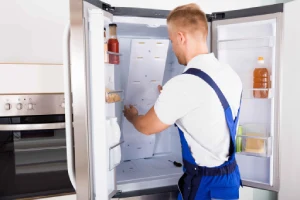
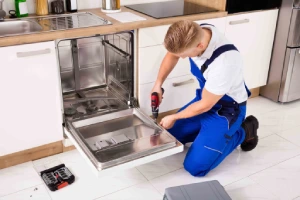
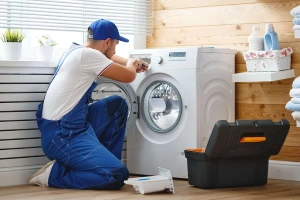
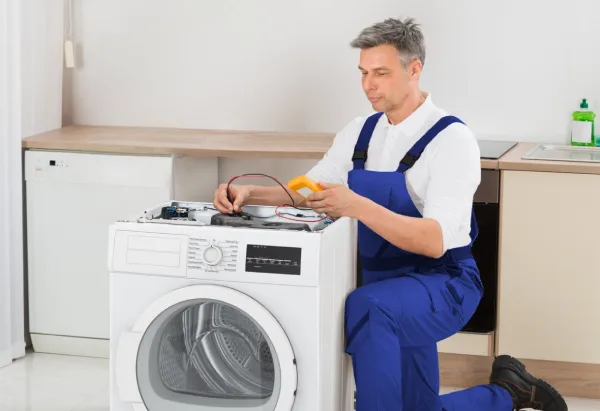
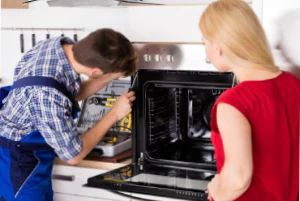
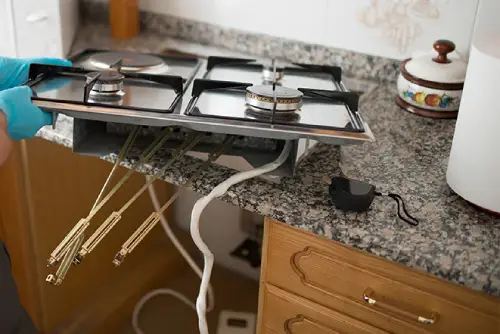
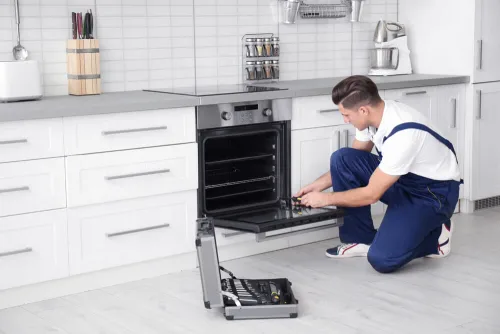
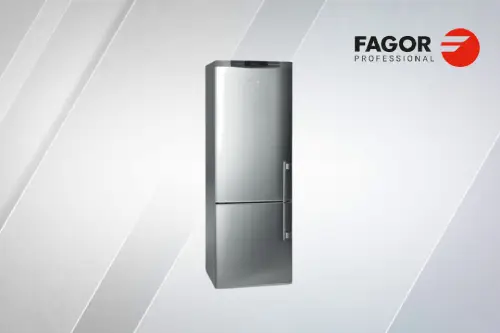
Fagor Refrigerator Repair
Fagor refrigerators were built on European sealed-system designs, and on the older units still running in Brooklyn the common faults are a compressor that cycles without pulling temperature, a blocked defrost drain, or a failed evaporator fan. We read thermistor resistance and check the frost pattern on the evaporator before condemning any sealed-system part.
Any work that opens the refrigerant circuit requires EPA Section 608 certification for recovery and recharge — our technicians hold it. On combination fridge-freezer units we also verify door gasket seal and airflow between compartments so cold reaches both zones after the repair.
Common issues we fix:
- Not cooling or cooling weakly
- Compressor runs constantly
- Frost buildup or blocked defrost drain
- Evaporator or condenser fan noise
- Water pooling under crisper
- Faulty thermostat or electronic control
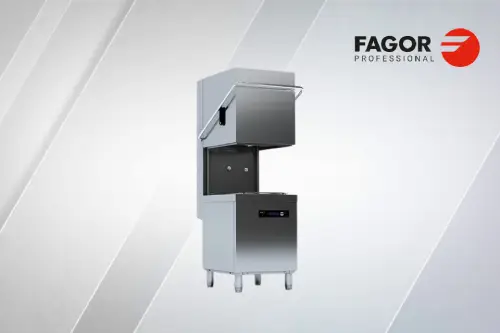
Fagor Dishwasher Repair
Fagor dishwashers (LVF and 3LVF series) use a fault-code system that displays an F followed by a number, or on non-display models signals the same fault as a count of beeps. That makes diagnosis precise: an F2 points at the water-inlet circuit, an F3 at drainage, and an F4 at an overflow trip in the base pan.
We test the inlet valve, drain pump, and float switch directly rather than swapping the board first, and we trace door and hose leaks to the actual drip point. The verified Fagor dishwasher codes are tabled further down this page.
Common issues we fix:
- Not draining (F3) or standing water
- Won’t fill / water-inlet fault (F2)
- Overflow trip in the base pan (F4)
- Dishes coming out unclean
- Door leak or worn latch
- Cycle won’t start or finish
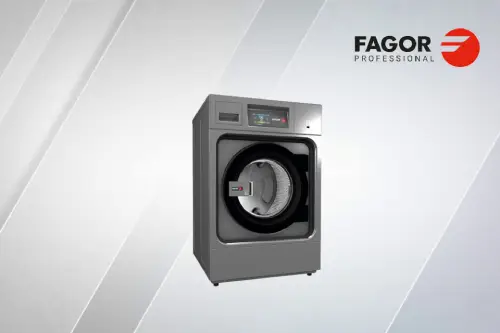
Fagor Washer Repair
Fagor front-load washers are the compact, European-footprint machines common in Brooklyn apartments. After years of use the usual failures are a seized or blocked drain pump, a worn door interlock that stops the cycle from starting, and drum-bearing wear that shows up as a loud spin.
We test drain pump continuity and impeller free-play, check the door lock switch, and verify motor-control output before recommending parts. Boot seal, pump housing, and hose clamps are the usual leak sources, and we trace each to its origin rather than the visible wet spot.
Common issues we fix:
- Won’t drain or won’t spin
- Leaking from door boot or underneath
- Door won’t lock or won’t release
- Loud or rumbling spin (bearing wear)
- Won’t start or stops mid-cycle
- Fills slowly or not at all
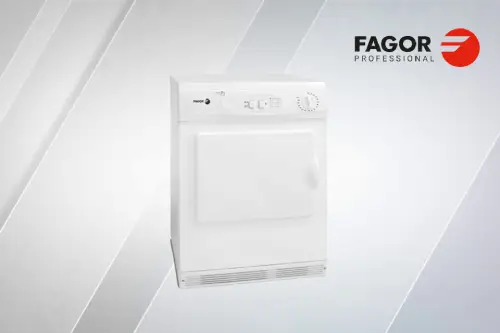
Fagor Dryer Repair
Fagor dryers are compact units suited to tight Brooklyn laundry spaces. When one stops heating, the fault is usually a failed heating element, an open thermal fuse, or a tripped thermostat — we test each for continuity rather than replacing by elimination.
Long cycle times and a drum that won’t turn trace to belts, rollers, or restricted venting, all of which we check on site. Because factory parts are discontinued, we match heating elements and fuses from the European supplier network to the exact platform.
Common issues we fix:
- No heat or overheating
- Drum not turning
- Takes too long to dry
- Won’t start
- Loud thumping or squeal
- Control or sensor faults
Fagor Oven Repair
Fagor ovens (5HA, 6HA, and 9H series wall ovens) hold temperature with an NTC sensor and a control board, and when baking drifts the cause is usually a sensor out of spec, a failed bake or broil element, or a control relay that no longer closes. We measure NTC resistance and element continuity before quoting.
Door hinge and gasket wear also throw off baking even when the heating circuit is fine, so we check the full oven system and verify temperature accuracy with a calibrated probe after any heating-component replacement.
Common issues we fix:
- Not heating or slow to preheat
- Runs too hot or too cold
- Broiler not working
- Door won’t close or seal
- Control panel unresponsive
- Oven shuts off mid-bake
Fagor Cooktop Repair
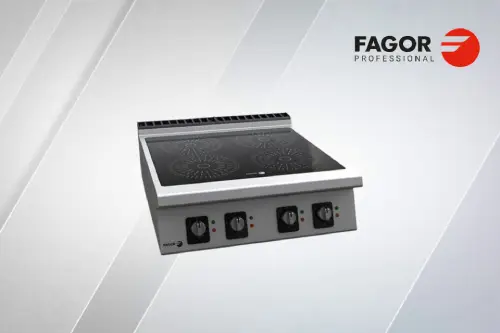
Fagor induction and ceramic cooktops depend on pan detection, a power module, and the induction coils working together. When a zone stops heating we verify cookware detection first, then test the power module and coil, and check the touch-control ribbon before condemning the board.
On gas hob models the usual faults are a spark igniter that keeps clicking or a burner that won’t light — we test the igniter, gas valve, and flame-sense circuit. Cracked glass is assessed and options explained rather than pushed to a full replacement.
Common issues we fix:
- Induction zone not detecting cookware
- Element or burner won’t heat
- Touch controls not responding
- Igniter keeps clicking (gas)
- Cracked glass (assessment and options)
- Indicator lights or error display
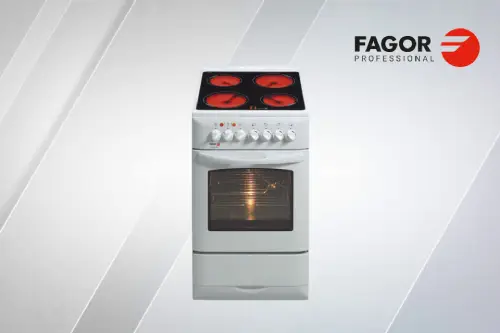
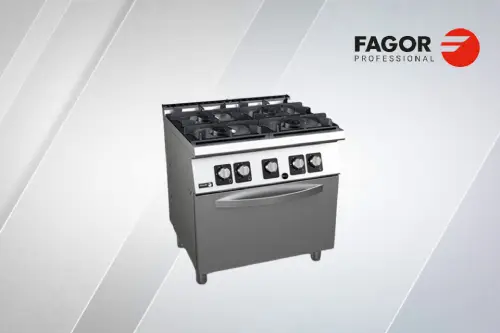
Fagor Stove & Range Repair
Fagor freestanding ranges pair a gas or electric cooktop with the oven cavity below, so a service call often touches both. Burner ignition failures, uneven surface heat, and a cavity that won’t hold temperature are the faults we see most on the older installed base.
We test igniters, gas valves, and surface elements, then confirm the oven thermostat and control board separately. Temperature calibration is verified after any heating-component swap so the range performs to spec before we leave.
Common issues we fix:
- Burners won’t ignite or heat
- Uneven surface heating
- Oven cavity won’t hold temperature
- Control knobs or switches faulty
- Smell of gas or weak flame (gas models)
- Display or control-board errors
Fagor Dishwasher Error Codes
Fagor dishwashers display a fault as the letter F followed by a number; on non-display models the same fault is signalled as that number of beeps (an F2 becomes two beeps). The codes below are the set published in Fagor’s own installation manual and instructions for use. Have your code ready when you call and we can arrive with the right part.
Verified Fagor dishwasher F-codes
| Code | Meaning |
|---|---|
| F1 | Door not closed |
| F2 | Water not entering (inlet fault) |
| F3 | Not draining |
| F4 | Flood / overflow |
| F5 | Overheating |
| F6 | Not heating |
| F7 | Temperature not detected (sensor) |
| F8 | No pressure |
| F9 | Uneven (water distribution) |
| F0 | Control fault |
Fagor washers, ovens, cooktops, and refrigerators do not use this same numeric code set, so for those appliances we diagnose by symptom rather than by a code. The table below shows how our technicians isolate the most common failures on those units.
Symptom → How We Diagnose (Fagor washers, ovens, cooktops & refrigeration)
| Appliance | Symptom | How we diagnose |
|---|---|---|
| Washer | Won’t drain or spin | Test drain pump continuity and impeller, check the door interlock switch, verify motor-control output |
| Washer | Leaks during spin | Trace the door boot, pump housing, and hose clamps to the actual drip point |
| Refrigerator | Runs constantly, not cooling | EPA 608 sealed-system check: condenser airflow, evaporator frost pattern, thermistor resistance |
| Oven | Won’t reach set temperature | Measure NTC sensor resistance, test bake-element continuity and the control-board relay |
| Cooktop (induction) | Zone not heating | Verify pan detection, test the power module and induction coil, check the touch-control ribbon |
| Gas range | Burner won’t light | Test the spark igniter, gas valve, and flame-sense circuit |
| Dryer | No heat | Test the heating element, thermal fuse, and thermostat for continuity |
Technician Case Studies — Fagor Repairs

Diagnostic & Resolution: Removed the sump filter and drain-pump cover — impeller fouled with debris and a partial hose blockage at the disposer connection. Cleared the line, confirmed the pump ran freely, and verified a full drain in under 90 seconds across two back-to-back cycles. No F3 recurrence.
Diagnostic & Resolution: Metered the door interlock switch — open circuit on the lock solenoid, no continuity when energized. Sourced a matching European-spec interlock, fitted it, and confirmed the lock engaged and the cycle advanced through fill and spin on a full test wash.
Diagnostic & Resolution: Measured the NTC oven sensor at room temperature and found it reading well outside spec, pulling the control’s temperature estimate high. Replaced the sensor, then verified the cavity held within a few degrees of set point at 350°F using a calibrated thermocouple.
Diagnostic & Resolution: Found a defrost drain iced over and heavy frost blocking evaporator airflow. Cleared the drain, restored airflow, and metered the thermistor to confirm it tracked temperature correctly. All sealed-system work was performed under EPA Section 608 practice; box pulled down to setpoint and held.
Diagnostic & Resolution: Confirmed pan detection failed on that zone only. Tested the induction coil and power module and isolated an open on the zone’s IGBT stage. Replaced the affected power-module section, re-tested detection and heat-up on all zones, and verified the internal cooling fan cycled correctly.
Diagnostic & Resolution: Cleaned a soiled igniter and burner cap, then tested the spark and gas valve — spark restored but weak flame carry-over remained. Replaced the worn spark igniter for that burner and confirmed clean, immediate ignition on all surface burners with no persistent clicking.
Frequently Asked Questions — Fagor Appliance Repair
What Fagor appliances do you repair?
My Fagor dishwasher shows an F-code — what does it mean?
Fagor is a discontinued European brand — can you still get parts?
What Fagor problems do you fix most often?
How much does Fagor appliance repair cost?
Address
Brooklyn, NY 11238
Manhattan, Staten Island
Appliance Repair
Payment Options