
 Refrigerator Repair
 Dishwasher Repair
 Washer Repair
 Dryer Repair
 Oven Repair
 Stove/Cooktop Repair
 Freezer Repair
 Appliance Installation
 Samsung
 Bosch
Bosch
 Thermador
 Miele
Miele
 Sub Zero
 Bloomberg
 Asko
Asko












Capital Appliance Repair Services
Your Local Capital Cooking Equipment Specialists
- Capital range burner sparks but won’t light
- Capital burner won’t stay lit (flame sensor)
- Culinarian simmer burner won’t hold low flame
- Capital oven bakes hot or cold (thermostat drift)
- Capital wall oven igniter glows, no flame
- Capital convection fan not circulating
- Capital rangetop igniter clicking constantly
- Capital induction cooktop won’t detect cookware
- Capital oven door gasket worn
- Capital Precision outdoor grill won’t ignite

Article Reviewed & Technically Verified by Dmitry V., Lead EPA-Certified Technician (15+ Years Experience)
Capital Cooking builds professional, restaurant-style cooking equipment — open-burner Culinarian ranges, Connoisseurian dual-fuel ranges, gas and induction cooktops, Maestro wall ovens, and Precision outdoor grills — that run on spark ignition, thermocouples, and mechanical oven thermostats rather than digital fault codes. Brooklyn Appliance Repair NYC provides same-day Capital cooking-equipment repair across Brooklyn and the surrounding boroughs.
Because Capital is a cooking-only manufacturer, these repairs are about combustion and heat control, not electronics: a burner that sparks but won’t catch, a flame that drops out after the knob is released, or an oven that drifts off calibration. We diagnose the actual mechanical fault — ignition module, burner orifice, thermocouple, or thermostat — before we quote a part.
Our Happy Customers
- 15+ Years Experience
- Warranty on Parts & Labour
- Gas, Dual-Fuel & Induction
- Skilled Technicians
Our Capital Appliance Repair Services
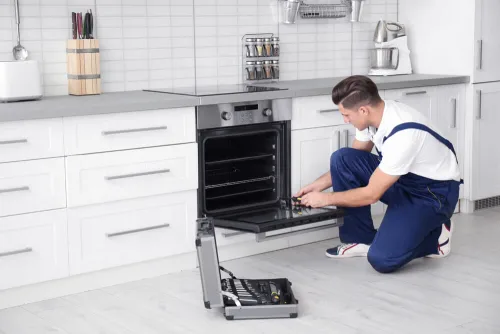
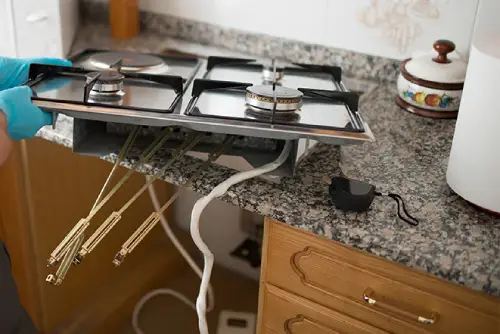
Capital Range Repair
Capital’s Culinarian open-burner ranges and Connoisseurian dual-fuel models are built around brass burners with individual spark ignition and, on the dual-fuel line, an electric convection oven. Most range service calls trace to combustion, not electronics: a burner that clicks without catching, a flame that collapses when you let go of the knob, or a simmer setting that won’t stay low. We diagnose ranges at the burner level rather than swapping whole assemblies.
On dual-fuel units we split the diagnosis — gas cooktop faults get burner and ignition testing, while the electric oven gets sensor and element checks. Genuine Capital burner and valve parts go on the truck so most open-burner faults are resolved on the first visit.
Common issues we fix:
- Burner sparks but won’t ignite
- Burner lights then goes out on release
- Simmer burner won’t hold a low flame
- Weak, uneven, or yellow flame
- One burner clicks constantly
- Gas smell at the manifold or valve
- Knob or valve stiff / won’t turn
- Grates or burner caps cracked or misaligned
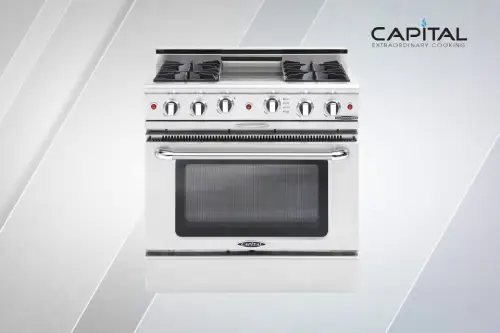
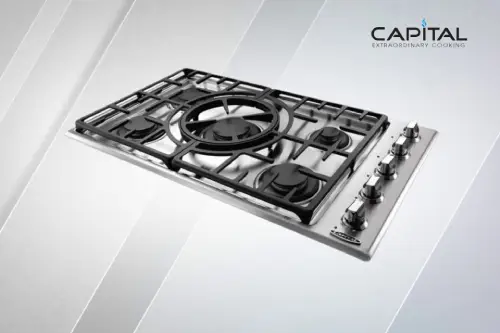
Capital Cooktop & Rangetop Repair
Capital makes both Culinarian gas rangetops and standalone cooktops, including induction models. Gas cooktops and rangetops fail at the igniter, orifice, or safety valve; induction units fail at the pan-detection sensor or the power board. Because the two technologies fail in completely different ways, we test the specific system rather than guessing.
On gas rangetops we check electrode gap, clear clogged burner ports, and confirm orifice sizing matches your fuel (natural gas vs. LP). On induction, we verify cookware is ferromagnetic before condemning any electronics — a surprising number of “dead” induction zones are just non-magnetic pans.
Common issues we fix:
- Burner won’t ignite or keeps clicking
- Flame won’t stay lit after ignition
- Uneven or weak heat across burners
- Simmer setting runs too high
- Induction zone won’t detect cookware
- Induction unit overheats and shuts off
- Cracked glass on an induction top (assessment)
- Knob or valve not responding smoothly
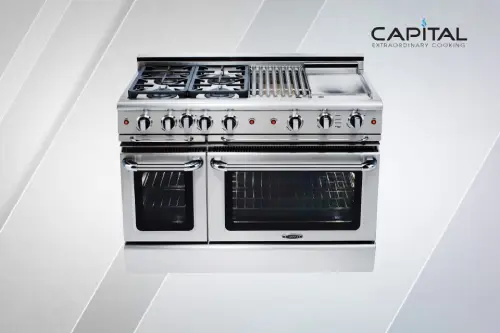
Capital Wall Oven Repair
Capital Maestro wall ovens (such as the 30″ MWOV301ES single and MWOV302ES double) and the electric ovens inside dual-fuel ranges use a mechanical thermostat, a bake igniter or element, and a convection motor. When an oven bakes off temperature, the sensor or thermostat has usually drifted — we verify it against a calibrated thermocouple before recalibrating or replacing anything.
On gas ovens we test whether the bake igniter draws enough current to open the safety valve; a weak igniter that still glows but won’t pull the valve is the single most common “oven won’t heat” cause. Convection and broil faults get their own motor and element checks. Diagnostic steps follow Capital Cooking’s official use & care documentation for burner and oven service.
Common issues we fix:
- Oven won’t reach or hold set temperature
- Bakes noticeably hot or cold
- Gas oven igniter glows but no flame
- Uneven baking front-to-back
- Convection fan not running
- Broiler not firing
- Door won’t seal / gasket worn
- Oven shuts off mid-bake
Capital Precision Outdoor Grill Repair
Capital’s Precision outdoor grills use the same high-BTU burner and spark-ignition philosophy as the indoor line, but they live outside — so moisture, corroded electrodes, and spider-blocked burner tubes are the usual culprits behind a grill that won’t light. We inspect the ignition module, electrodes, and burner venturi rather than replacing the whole burner set on sight.
Rotisserie motors, thermometer accuracy, and infrared sear-zone burners each get checked individually. Outdoor grills sit outside the standard repair hubs, so if you have a Precision grill, call us directly and we’ll confirm parts availability before dispatch.
Common issues we fix:
- Grill burner won’t ignite or catch
- Uneven heat across the grill surface
- Igniter clicking with no spark
- Flame blowing out in wind
- Rotisserie motor not turning
- Infrared sear burner not glowing
- Corroded burners or electrodes
- Gas flow restricted at the regulator
How We Diagnose Capital Cooking Faults
Capital equipment is largely mechanical — open burners, spark ignition, and thermostatic ovens — so it does not throw digital error codes the way mass-market brands do. Instead of chasing a code, we work symptom-first. The tables below show how our technicians isolate the actual failed component on a Capital range, cooktop, or oven.
Capital Range & Cooktop — Symptom to Diagnosis
| Symptom | How We Diagnose It |
|---|---|
| Sparks but won’t light | Check spark ignition module output and electrode gap; inspect burner orifice and ports for blockage; verify manifold gas pressure. |
| Lights then goes out | Test thermocouple / flame-sensor millivolt output and ground; inspect the gas safety valve for weak hold. |
| Weak or uneven flame | Confirm orifice sizing matches fuel (NG vs. LP), clean burner ports, and check regulator pressure. |
| Constant clicking | Dry moisture at the igniter, inspect the spark module and switch contacts, and check for a cracked electrode ceramic. |
| Simmer won’t hold low | Test the burner valve simmer setting and orifice; verify flame stability at minimum input. |
| Induction won’t detect pan | Confirm cookware is ferromagnetic, then test the pan-detection sensor and induction coil / power board. |
Capital Wall Oven & Range Oven — Symptom to Diagnosis
| Symptom | How We Diagnose It |
|---|---|
| Bakes hot or cold | Test the oven thermostat / temperature sensor and verify against a calibrated thermocouple before recalibrating. |
| Gas oven won’t heat | Measure whether the bake igniter draws enough current to open the safety valve — a glowing-but-weak igniter is the top cause. |
| Uneven baking | Test the convection motor and element operation and inspect the door gasket for a poor seal. |
| Broiler not firing | Inspect the broil igniter / element and its valve or relay circuit. |
| Shuts off mid-bake | Check for thermostat drift, a failing sensor, or an overheating limit trip in the control. |
Technician Case Studies — Capital Repairs

Diagnostic & Resolution: Confirmed spark at the electrode but no flame — burner port and orifice were clogged with spilled residue. Cleared the orifice and ports, verified electrode gap, and confirmed a clean, even flame with a stable simmer through the full valve range.
Diagnostic & Resolution: Measured thermocouple/flame-sensor output — below the threshold needed to hold the safety valve open. Replaced the affected flame sensors, re-checked millivolt output at temperature, and confirmed both burners held flame at every setting.
Diagnostic & Resolution: Compared oven cavity temperature against a calibrated thermocouple — sensor had drifted out of spec. Replaced the temperature sensor and ran the calibration routine; verified within ±5°F of set point across bake and convection.
Diagnostic & Resolution: Tested the burner valve at its simmer stop — valve was passing excess gas at minimum. Serviced the valve and confirmed correct orifice sizing for natural gas; restored a steady low simmer without flame lift.
Diagnostic & Resolution: Traced the constant spark to a cracked electrode ceramic holding moisture and shorting the spark module. Replaced the electrode, dried and cleaned the switch contacts, and confirmed the clicking stopped and normal ignition returned.
Diagnostic & Resolution: Found a spider-blocked burner venturi and a corroded electrode. Cleared the venturi tubes, replaced the electrode, and confirmed reliable ignition and even heat across all zones.
Frequently Asked Questions — Capital Appliance Repair
What Capital appliances do you repair?
Do you work on both gas and induction Capital units?
Is there a warranty on Capital repairs?
My Capital burner sparks but won’t light — what’s wrong?
How much does Capital appliance repair cost?
Address
Brooklyn, NY 11238
Manhattan, Staten Island
Appliance Repair
Payment Options