 Refrigerator Repair
 Dishwasher Repair
 Washer Repair
 Dryer Repair
 Oven Repair
 Stove/Cooktop Repair
 Freezer Repair
 Appliance Installation
 Samsung
 Bosch
Bosch
 Thermador
 Miele
Miele
 Sub Zero
 Bloomberg
 Asko
Asko













Café Appliance Repair Services
Your Local Café Appliance Repair Company
- Café range F3 oven RTD sensor fault
- Café range F2 oven over-temperature shutdown
- Café dual-fuel gas burner won’t ignite
- Café induction cooktop inverter board failure
- Café French-door dual ice maker not producing
- Café F9 oven door-lock circuit error
- Café dishwasher not draining / drain pump fault
- Café Advantium wall oven control fault
- Café SmartHQ Wi-Fi connectivity drop
- Café washer OdorBlock vent / drain fault

Article Reviewed & Technically Verified by Dmitry V., Lead EPA-Certified Technician (15+ Years Experience)
Café is GE Appliances’ premium, customizable line—pro-style gas, dual-fuel, and induction ranges, French-door refrigerators, dishwashers, and Advantium wall ovens. Because Café runs on GE’s control platform, its ranges report the same F-series fault codes (F2, F3, F9) and need RTD-sensor and EPA Section 608 sealed-system diagnostics. Brooklyn Appliance Repair NYC delivers same-day Café service across Brooklyn.
Our Happy Customers
- 15+ Years Experience
- Warranty on Parts & Labour
- 100% client satisfaction
- Skilled Technicians
Our Café Appliance Repair Services
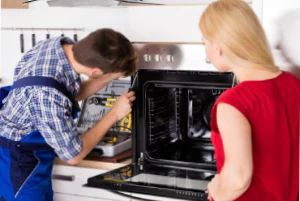
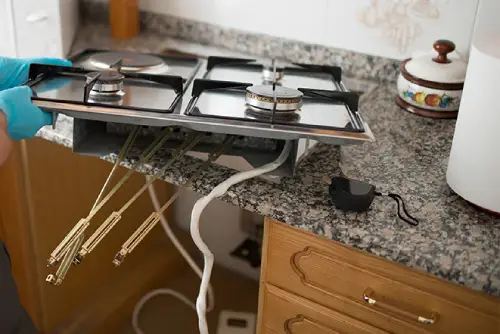
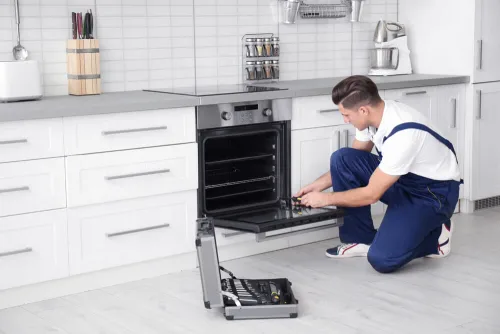
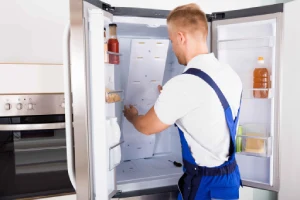
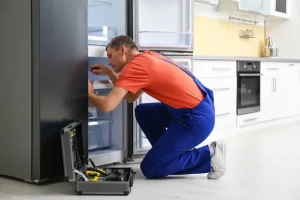
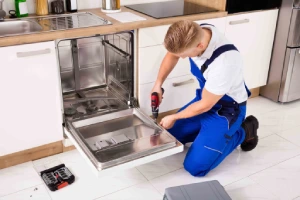
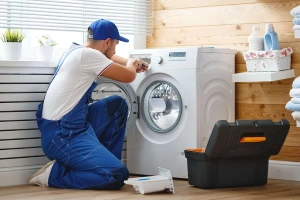
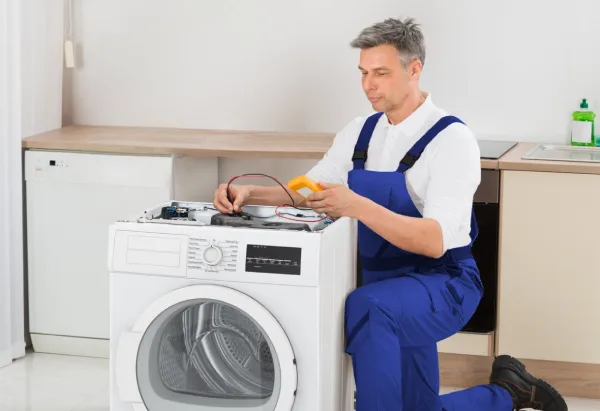
Café Oven & Range Repair
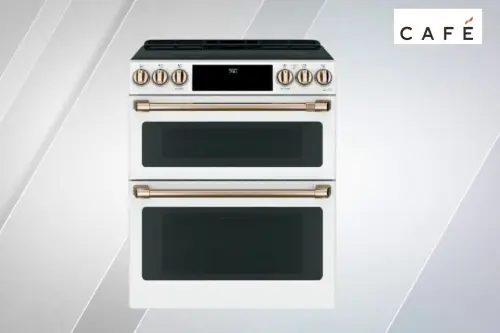
Café ranges and wall ovens—gas, dual-fuel, and induction models like the C2S985SETSS and the double-oven C2S995SELSS—are the flagship of the line, with true European convection, self-clean, and a temperature-probe port. When one underbakes, overshoots, or throws an F-series code, the cause is usually the oven RTD sensor, a bake/broil element, or the control board rather than the burner you can see. Our oven repair covers the full Café cooking range.
We measure the RTD sensor against its ~1,080Ω room-temperature spec, verify element continuity, and confirm calibration with a thermocouple before we call the job done—so an F3 (open sensor) or F2 (over-temperature) doesn’t come back a week later.
Common issues we fix:
- Not heating, slow preheat, or bakes uneven
- Runs too hot / F2 over-temperature shutdown
- F3 or F4 oven temperature-sensor faults
- Convection fan not running
- Self-clean cycle jams / F9 door-lock error
- Gas oven burner won’t light or cycles off
- Touchpad unresponsive (F0/F7)
- Oven shuts off mid-bake
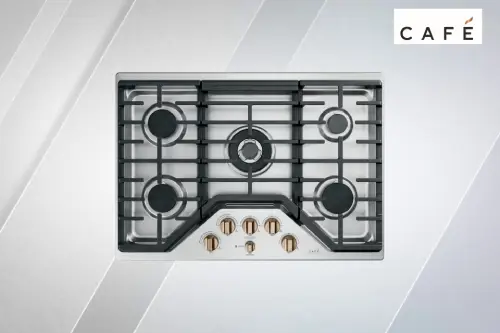
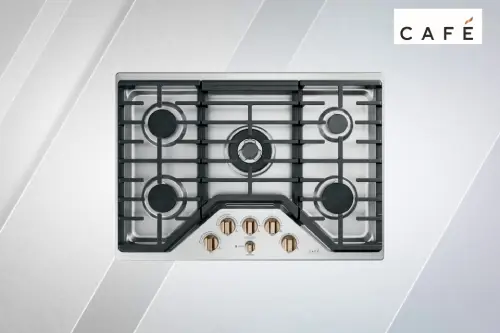
Café Cooktop Repair
Café induction and electric cooktops deliver precise heat through inverter boards, pan-detection coils, and glass-touch controls. When a zone stops responding or won’t recognize cookware, the fault is typically an inverter/power board or the induction coil—not the glass—and we test each zone’s drive circuit before quoting a part.
Gas Café cooktops instead depend on spark igniters and sealed burner assemblies. We check igniter spark, the gas valve, and burner alignment so a clicking igniter or weak flame is traced to the actual component.
Common issues we fix:
- Induction zone won’t detect cookware
- Burner won’t heat or overheats
- Cracked glass surface (assessment and options)
- Touch controls frozen or erratic
- Gas igniter keeps clicking
- Internal cooling fan running constantly
- Single zone dead, others fine
- Power or wiring faults
Café Stove Repair
On Café pro-style stoves—including gas models such as the CGS980SEMSS with its tri-ring power burner—problems usually build gradually: a burner that lights slowly, a griddle zone that won’t hold heat, or knobs that feel intermittent. We inspect burner heads, spark modules, gas valves, and the wiring harness to restore predictable output.
Intermittent shutdowns and control faults are diagnosed by testing switches, relays, and the control board directly, then re-checking temperature after any heating component is replaced.
Common issues we fix:
- Burners not lighting or heating evenly
- Weak flame or smell of gas (gas models)
- Stove won’t power on
- Control knobs not responding
- Igniter won’t stop clicking
- Griddle / center burner underperforming
- Electrical sparking or tripping breaker
- Display and control-board faults
Café Fridge Repair
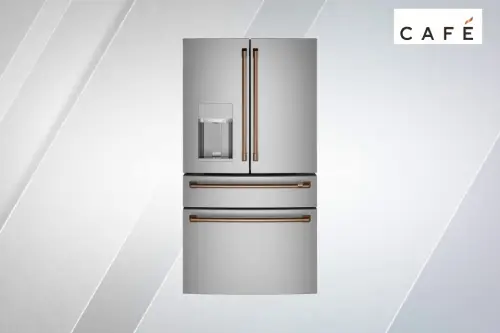
Café French-door refrigerators like the CFE28TSHSS and counter-depth CVE28DP3ND1 pair dual ice makers and a hot-water dispenser with SmartHQ monitoring. When cooling drifts or ice production stops, the fault is rarely obvious—we check the sealed system, evaporator fan, damper, and thermistor readings to isolate it. Sealed-system work is performed under EPA Section 608 refrigerant-recovery certification.
Water and ice features run on valves, filters, and a heated dispenser line that fail independently of cooling. We trace leaks and no-ice complaints to the actual source so the repair holds.
Common issues we fix:
- Warm or inconsistent temperatures
- Dual ice maker not producing or overfilling
- Water leaking inside or onto the floor
- Frost buildup on the back wall
- Loud fan, buzzing, or compressor noise
- Door not sealing / condensation at gasket
- Hot-water dispenser not working
- Control-panel or sensor faults
Café Freezer Repair
The bottom-freezer compartment on Café French-door units shares the same sealed refrigeration circuit as the fresh-food side, so a freezer that warms or ices over usually points to a defrost-system fault or an airflow restriction on the evaporator. We diagnose the defrost heater, bi-metal thermostat, and drain path to restore stable temperature.
Even cooling depends on consistent evaporator-fan circulation. We verify fan operation and gasket alignment so cold air reaches every drawer after the repair, and recover refrigerant to EPA Section 608 standards on any sealed work.
Common issues we fix:
- Not freezing or weak freezing
- Heavy frost or ice sheets on the back panel
- Freezer runs constantly
- Clicking, buzzing, or fan noise
- Drawer not closing or sealing
- Temperature swings between cycles
- Water pooling or ice clumps at the base
- Defrost sensor faults
Café Dishwasher Repair
Café dishwashers such as the CDT845P2NS1 use a bottle-wash jet bank, adjustable tines, and a quiet circulation pump, so a failing drain pump or worn door latch often goes unnoticed until dishes stay wet or water sits in the tub. We test the drain and circulation pumps individually, check the filter and hose for blockage, and verify the heating circuit before recommending any part.
Rather than reading a fault light and swapping boards, we confirm pump flow and door-switch continuity so the real failure—not a symptom—gets fixed.
Common issues we fix:
- Not draining / standing water
- Leaks from the door or base
- Dishes cloudy or still soiled
- No heat / poor drying
- Won’t fill or fills slowly
- Stops mid-cycle or beeps
- Spray arms not spinning
- Door latch or control faults
Café Washer Repair
Café front-load washers use UltraFresh vent and OdorBlock systems to keep the gasket dry, but drain pumps, door-lock assemblies, and suspension parts still wear. When one won’t drain, walks across the floor, or stops mid-cycle, we test the fill valve, drain pump, and door interlock instead of replacing parts by guesswork.
Boot seals, pump housings, and dispenser lines are the usual leak sources. We trace water back to its origin so the repair addresses the failure point, not just the wet spot.
Common issues we fix:
- Won’t drain or won’t spin
- Leaking from door boot or underneath
- Excessive shaking or walking
- Door won’t lock or won’t open
- Fills slowly or won’t fill
- Odor from the gasket / vent system
- Stops mid-cycle
- Error codes and control-board faults
Café Dryer Repair
Café dryers rely on sensor-dry moisture bars and, on some models, a steam cycle to protect fabrics—so a partial vent blockage or a dirty sensor can stretch cycle times without any obvious fault. We check venting airflow, heater output, and sensor calibration to bring drying back to normal.
Unusual noise typically traces to drum rollers, the idler pulley, or the blower wheel—parts we test and replace on-site. Gas Café dryers add igniter and gas-valve checks, which we perform with the burner isolated for safety.
Common issues we fix:
- No heat or insufficient heat
- Takes too long to dry
- Stops mid-cycle or won’t start
- Burning smell or overheating
- Loud squeal, thump, or scraping
- Drum not turning
- Moisture sensor not detecting dryness
- Error codes and control faults
Common Café Range & Oven Error Codes
Because Café is the premium tier of GE’s cooking platform, its ranges and wall ovens report the same F-series fault codes as the wider GE appliance repair family. Having the exact code ready lets us bring the right sensor or board and finish most visits in one trip. The meanings below are drawn from GE’s own reference—see GE Appliances’ official range & wall oven fault-code documentation for the full list.

Café oven and range fault codes
| Code | Meaning |
|---|---|
| F0 / F7 | Stuck or shorted touchpad key / keypanel fault |
| F1 | Electronic control (ERC) failure |
| F2 | Oven temperature exceeded a preset threshold (over-temperature) |
| F3 | Oven temperature sensor (RTD) open — sensor replacement |
| F4 | Oven temperature sensor (RTD) shorted |
| F9 | Door-lock circuit fault |
An F3 or F4 both point at the oven RTD: we ohm the sensor against its ~1,080Ω room-temperature spec and check the harness back to the control before condemning either part. An F2 can be a shorted sensor or a stuck relay on the control board, so we confirm which one is driving the element before replacing anything.
Café dishwasher and refrigerator diagnostics
Café dishwashers and refrigerators don’t use the oven F-series codes—they have their own onboard diagnostics. On a dishwasher that won’t drain, we test the drain pump for continuity, clear the sump and check-valve, and confirm the door latch closes the circuit. On a French-door refrigerator with no ice, we verify the water inlet valve, the ice-maker module heater, and evaporator airflow rather than reading a single indicator light. Call us with your symptom and model number and we’ll confirm the likely cause before we arrive.
Technician Case Studies — Café Repairs

Diagnostic & Resolution: Ohmed the oven RTD sensor at room temp — read open circuit (spec ~1,080Ω). Replaced the temperature sensor, ran the calibration routine, and verified ±5°F of set point with a calibrated thermocouple across a full preheat.
Diagnostic & Resolution: Isolated a stuck bake relay on the control board while the RTD read in-spec. Replaced the electronic control, cycled bake and broil three times, and confirmed the relay dropped out correctly at target temperature.
Diagnostic & Resolution: Traced a failed ice-maker module heater and a partially iced evaporator from a stalled defrost heater. Replaced both components under EPA Section 608 practice for the sealed side; ice production and cabinet temperature confirmed over a 24-hour follow-up.
Diagnostic & Resolution: Drain pump read open on the winding and the sump held debris. Replaced the drain pump and cleared the check-valve; confirmed full drain-down in under 90 seconds across two back-to-back cycles.
Diagnostic & Resolution: Found a seized door-latch motor in the lock circuit. Replaced the latch assembly, verified the lock switch closed the circuit, and ran a shortened clean cycle to confirm the door released normally.
Diagnostic & Resolution: Confirmed a shorted key on the membrane keypanel rather than the main board. Replaced the touch panel, power-cycled at the breaker, and verified every pad and the speed-cook functions before returning the unit to service.
Frequently Asked Questions — Café Appliance Repair
What Café appliances do you repair?
My Café range shows an F2 or F3 code — what does it mean?
Do you repair gas Café ranges, or only electric and induction?
What Café problems do you fix most often?
Is there a warranty on Café repairs, and how much does it cost?
Address
Brooklyn, NY 11238
Manhattan, Staten Island
Appliance Repair
Payment Options