
 Refrigerator Repair
 Dishwasher Repair
 Washer Repair
 Dryer Repair
 Oven Repair
 Stove/Cooktop Repair
 Freezer Repair
 Appliance Installation
 Samsung
 Bosch
Bosch
 Thermador
 Miele
Miele
 Sub Zero
 Bloomberg
 Asko
Asko














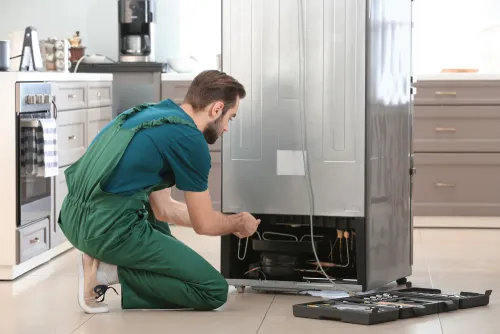
Brigade Appliance Repair Services
Your Local Brigade Appliance Repair Company
- Sealed surface burner clicks but won’t light
- Burner lights then goes out (flame not holding)
- Low or uneven flame after LP/NG conversion
- Wall oven overshooting or undershooting set temp
- Bake igniter glowing but not lighting gas
- Built-in refrigerator running warm / short-cycling
- Freezer column frost buildup or defrost fault
- Range hood blower motor not running
- Dishwasher not draining or leaving standing water
- Oven door hinge or self-clean latch failure

Article Reviewed & Technically Verified by Dmitry V., Lead EPA-Certified Technician (15+ Years Experience)
Brigade is Viking Range’s commercial-style appliance line — the same equipment Viking builds in Greenwood, Mississippi, sold under the Brigade name in Canada. It covers pro-style gas ranges, wall ovens, cooktops, built-in refrigeration, and dishwashers. Brooklyn Appliance Repair NYC services Brigade equipment across Brooklyn and the surrounding boroughs, with EPA Section 608 certified diagnostics for sealed refrigeration.
Because Brigade is an uncommon, Canadian-market label, correct parts sourcing starts at the model and serial plate. We identify the underlying Viking platform the unit is built on, then match the right OEM-equivalent components — rather than guessing at parts for a badge most local shops rarely see. Brigade does not make laundry appliances, so our scope here is cooking, refrigeration, and dishwashing.
Our Happy Customers







- 15+ Years Experience
- Warranty on Parts & Labour
- 100% client satisfaction
- Skilled Technicians
Our Brigade Appliance Repair Services
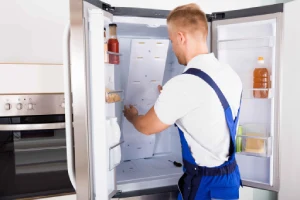
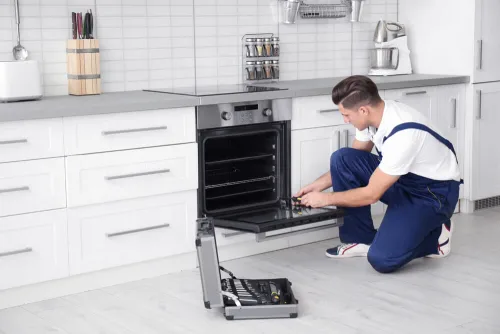
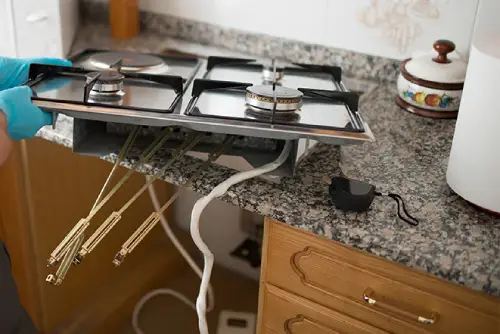
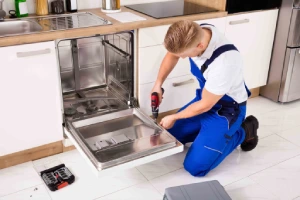
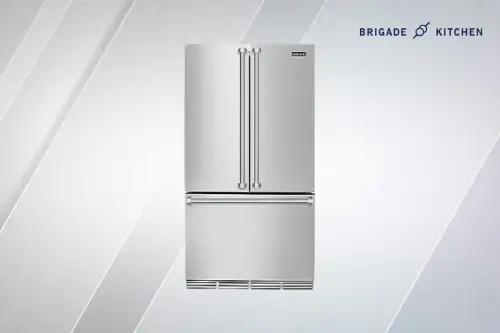
Brigade Refrigeration Repair
Brigade built-in refrigerators and freezer columns are Viking-platform sealed systems, so a warm cabinet is rarely a simple thermostat swap. We read the evaporator frost pattern, verify condenser-fan operation and coil airflow, and check the compressor start components before touching the sealed system. Any refrigerant work is done under EPA Section 608 certification.
Freezer columns and ice makers fail independently of the fresh-food side. We test the defrost heater and thermostat when frost builds up, and trace icemaker faults to the fill valve, fill tube, or module rather than replacing the whole assembly on a guess.
Common issues we fix:
- Fresh-food side warm while freezer stays cold
- Compressor short-cycling or running constantly
- Heavy frost on the evaporator or freezer walls
- Ice maker not producing or overfilling
- Water pooling under drawers or on the floor
- Condenser or evaporator fan noise
- Door gasket not sealing, condensation at the frame
Brigade Range & Stove Repair
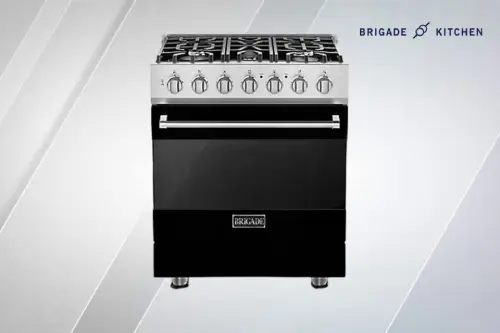
Brigade pro-style ranges are mostly gas, with dual-fuel and electric variants, and the sealed burners run on standing electronic ignition rather than digital control. When a burner clicks without lighting, we clean and reposition the spark electrode, check the spark module, and confirm the burner cap and head are seated correctly before condemning any part.
If a burner lights and then drops out, the flame sensor or gas valve is usually at fault. On the oven side of a range we test the bake igniter draw and the safety valve. We also confirm the LP/NG conversion matches the gas supply, since a mismatched orifice or regulator is a common cause of weak flame.
Common issues we fix:
- Surface burner clicks but won’t ignite
- Flame lights then goes out
- Weak or uneven flame across burners
- Range oven not reaching temperature
- Smell of gas or delayed ignition
- Control knobs or valves stiff or unresponsive
- Grates, caps, or burner heads worn
Brigade Cooktop Repair
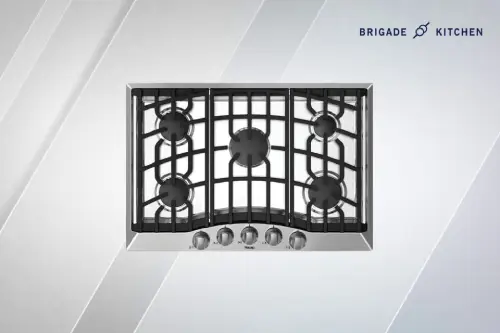
A Brigade gas cooktop such as the CRVGC33015BSSLP uses staged sealed burners — a 17,000 BTU dual-stacked center burner alongside lighter simmer burners — so “won’t heat right” means different things on different burners. We test each burner individually, check the orifice sizing, and verify the regulator setting before assuming the cooktop itself is at fault.
On electric and induction Brigade cooktops we check element resistance, the touch-control board, and pan detection on induction models. Induction units also depend on an internal cooling fan, which we confirm is running so the cooktop stays safe under load.
Common issues we fix:
- Burner won’t light or keeps clicking
- Low flame on one burner only
- Uneven or weak heat output
- Touch controls unresponsive (electric/induction)
- Induction not detecting cookware
- Cracked glass surface (assessment and options)
Brigade Oven Repair
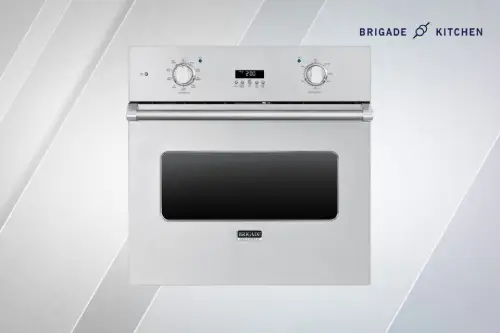
Brigade wall ovens that bake unevenly or drift off temperature almost always have a failing oven temperature sensor or a convection element issue — not a control board, as is often assumed. We measure the sensor’s resistance against spec and verify temperature with a calibrated thermocouple before recommending any part.
On gas wall ovens we check the bake igniter’s current draw: a weak igniter still glows but no longer pulls enough current to open the safety valve, so the oven never lights. Door hinge wear and self-clean latch faults are mechanical and diagnosed directly.
Common issues we fix:
- Oven runs too hot or too cold
- Slow or no preheat
- Bake igniter glows but gas won’t light
- Convection fan not running
- Broiler not working
- Door won’t seal or self-clean latch stuck
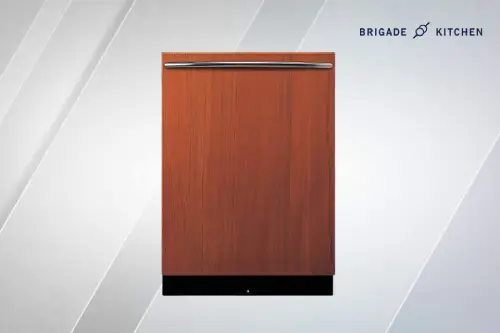
Brigade Dishwasher Repair
Brigade built-in dishwashers share the Viking platform, and the two failures we see most are drainage problems and poor cleaning. Standing water usually traces to a jammed drain pump impeller or a kinked drain hose, which we clear and re-route with a proper high loop rather than just resetting the cycle.
When dishes come out dirty, we check spray-arm rotation, the wash pump, the inlet valve, and incoming water temperature before condemning any component. Leaks are traced to the door gasket, tub seals, or pump housing so the repair fixes the origin, not just the wet spot.
Common issues we fix:
- Not draining / standing water in the tub
- Dishes come out cloudy or greasy
- Leaks from the door or underneath
- Won’t start or stops mid-cycle
- Poor drying performance
- Door latch or control issues
Brigade Diagnostics: Symptom to How We Diagnose
Brigade’s pro-style ranges and cooktops are largely electromechanical and do not display digital error codes, so accurate repair depends on component testing rather than reading a code off the panel. The tables below outline how our technicians actually track down each fault. Have your model and serial number ready when you call so we can bring the right OEM-equivalent parts.
Gas range & cooktop burners
| Symptom | How We Diagnose |
|---|---|
| Clicks but won’t light | Inspect and reposition the spark electrode, check gap and cracked ceramic, test the spark module, reseat burner cap |
| Lights then goes out | Test flame sensor / thermocouple response and confirm the gas valve opens fully |
| Weak / low flame | Check orifice for blockage or wrong size, verify regulator setting and LP/NG conversion |
| Gas smell / delayed ignition | Leak-check valve and manifold connections, clean burner ports, verify ignition timing |
Wall oven & range oven
| Symptom | How We Diagnose |
|---|---|
| Runs hot or cold | Measure oven temperature sensor resistance vs. spec, verify with calibrated thermocouple, adjust offset |
| Igniter glows, no flame | Measure bake igniter current draw; low draw won’t open the safety valve — replace igniter |
| Uneven bake | Test convection element and fan motor, inspect door seal for heat loss |
| Door / self-clean latch stuck | Test latch motor and switch, inspect hinges for wear |
Built-in refrigeration
| Symptom | How We Diagnose |
|---|---|
| Warm cabinet | Check condenser fan and coil airflow, read evaporator frost pattern, test start components (EPA 608 for sealed work) |
| Frost buildup | Test defrost heater and defrost thermostat, inspect door gasket seal |
| No ice | Test water inlet valve, fill tube for freeze-up, and icemaker module |
| Short-cycling / noise | Inspect evaporator and condenser fan motors, compressor mounts and relay |
Dishwasher
| Symptom | How We Diagnose |
|---|---|
| Won’t drain | Check drain pump impeller for debris, inspect drain hose for kinks, confirm high-loop routing |
| Poor cleaning | Verify spray-arm rotation, test wash pump and inlet valve, check incoming water temperature |
| Leaking | Trace to door gasket, tub seals, or pump housing before replacing parts |
| Won’t start | Test door latch switch and control power at the harness |
Technician Case Studies — Brigade Repairs

Diagnostic & Resolution: Found a cracked ceramic spark electrode arcing to the burner base. Replaced the spark igniter, reseated the burner cap and head, and cleaned the ports. Confirmed clean ignition on all surface burners.
Diagnostic & Resolution: Measured the oven temperature sensor resistance — reading drifted well outside spec. Replaced the sensor and re-verified with a calibrated thermocouple within ±5°F across the bake range.
Diagnostic & Resolution: EPA 608 sealed-system check confirmed charge was intact; the fault was a failing condenser fan motor plus a dust-packed condenser coil. Replaced the fan motor, cleaned the coil, and confirmed the cabinet returned to temperature.
Diagnostic & Resolution: Traced to a partially blocked orifice and a regulator still set for the previous fuel after an incomplete NG conversion. Cleared the orifice, corrected the conversion, and verified full high-output flame on the 17,000 BTU center burner.
Diagnostic & Resolution: Drain pump impeller was jammed with debris and the drain hose had a kink behind the cabinet. Cleared the pump, re-routed the hose with a proper high loop, and confirmed full drainage on two back-to-back cycles.
Frequently Asked Questions — Brigade Appliance Repair
What Brigade appliances do you repair?
Is Brigade the same as Viking?
Do Brigade appliances show error codes?
Can you get parts for an uncommon Canadian brand like Brigade?
What warranty and pricing do you offer on Brigade repairs?
Address
Brooklyn, NY 11238
Manhattan, Staten Island
Appliance Repair
Payment Options