 Refrigerator Repair
 Dishwasher Repair
 Washer Repair
 Dryer Repair
 Oven Repair
 Stove/Cooktop Repair
 Freezer Repair
 Appliance Installation
 Samsung
 Bosch
Bosch
 Thermador
 Miele
Miele
 Sub Zero
 Bloomberg
 Asko
Asko














Brada Appliance Repair Services
Your Local Brada Compact Appliance Repair Company
- Mini fridge running but cabinet stays warm
- Beverage cooler not holding its set temperature
- Compact freezer frosting over the evaporator
- Chest freezer running non-stop, weak freezing
- Compressor clicking on and off (start relay)
- Condenser or evaporator fan noisy or stopped
- Wine cooler losing cooling on the lower shelves
- Portable washer won’t drain the tub
- Portable washer won’t spin or agitate
- Torn door gasket, sweating cabinet

Article Reviewed & Technically Verified by Dmitry V., Lead EPA-Certified Technician (15+ Years Experience)
Brada is a budget brand built around compact refrigeration and portable laundry — mini and counter-depth fridges, compact and chest freezers, beverage and wine coolers, and portable washers. These units run simple thermostat-controlled sealed systems with no digital fault display, so we diagnose by measured symptoms rather than error codes. Brooklyn Appliance Repair NYC services Brada across Brooklyn with same-day availability.
Our Happy Customers





- 15+ Years Experience
- Warranty on Parts & Labour
- Honest repair-vs-replace advice
- EPA-Certified Technicians
Our Brada Appliance Repair Services
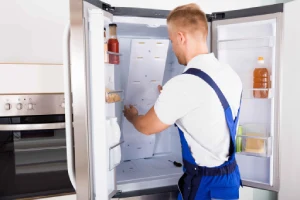
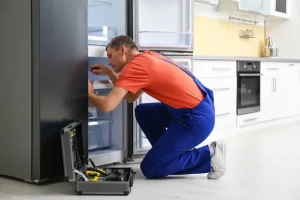
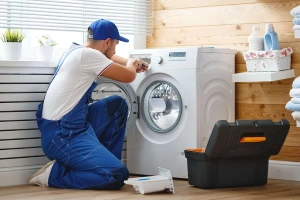
Brada Mini & Compact Refrigerator Repair
Brada mini and counter-depth refrigerators use a single fixed-speed compressor and a mechanical cold-control thermostat — there is no inverter board and no on-screen fault code. When the cabinet stays warm, we start at the cold-control and the sealed-system start components rather than guessing at a control board that these units don’t have.
Because the whole cooling circuit is basic, most faults trace to one of four parts: the thermostat, the PTC start relay and overload on the compressor, the condenser or evaporator fan, or a tired door gasket. Sealed-system work is done under EPA Section 608 certification.
Common issues we fix:
- Compressor runs but cabinet never gets cold
- Compressor clicks on and off every few minutes
- Frost sheeting over the rear evaporator panel
- Warm spots, condensation, or a sweating door
- Buzzing or rattling from the condenser fan
- Loss of cooling after a power interruption
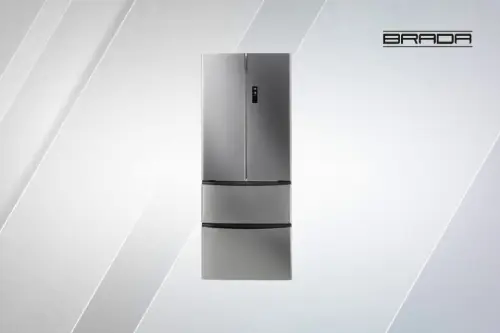
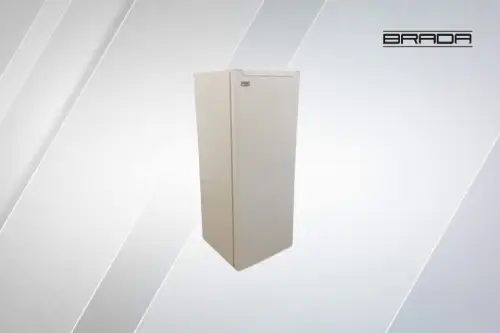
Brada Compact & Chest Freezer Repair
A Brada compact or chest freezer that runs constantly but holds a soft temperature almost always has a sealed-system or airflow problem, not a control fault — these units are manual-defrost with a mechanical thermostat. We check the thermostat contacts, the start relay, and the amount of frost on the evaporator wall before touching refrigerant. Freezer service is filed under our refrigeration repair line.
On chest models the lid gasket and hinge spring are common culprits: a lid that no longer seals lets warm, humid air in, which shows up as heavy frost and long run times. We test the seal and confirm the compressor is pulling normal current before recommending a part.
Common issues we fix:
- Freezer runs non-stop but stays soft
- Heavy frost or ice sheets on the walls
- Compressor won’t start, only hums or clicks
- Lid or door won’t seal, edges sweating
- Buzzing, humming, or clicking from the relay
- Interior light out, warm sections
Brada Beverage & Wine Cooler Repair
Brada beverage and wine coolers are small compressor-driven units, so when the bottom shelves stay cold but the upper rack drifts warm, we look at fan circulation and the cold-control setting first. We verify evaporator fan operation, door-seal contact, and thermostat calibration before condemning the sealed system.
Glass doors and the low-wattage interior fan make these units sensitive to a worn gasket or a stalled fan — either one lets the set temperature wander. We measure actual cabinet temperature against the dial and trace the drift to its source.
Common issues we fix:
- Cooler not reaching its set temperature
- Warm upper shelves, cold lower shelves
- Glass door not sealing, condensation inside
- Evaporator fan stalled or noisy
- Compressor short-cycling on the start relay
- Interior light or control dial unresponsive
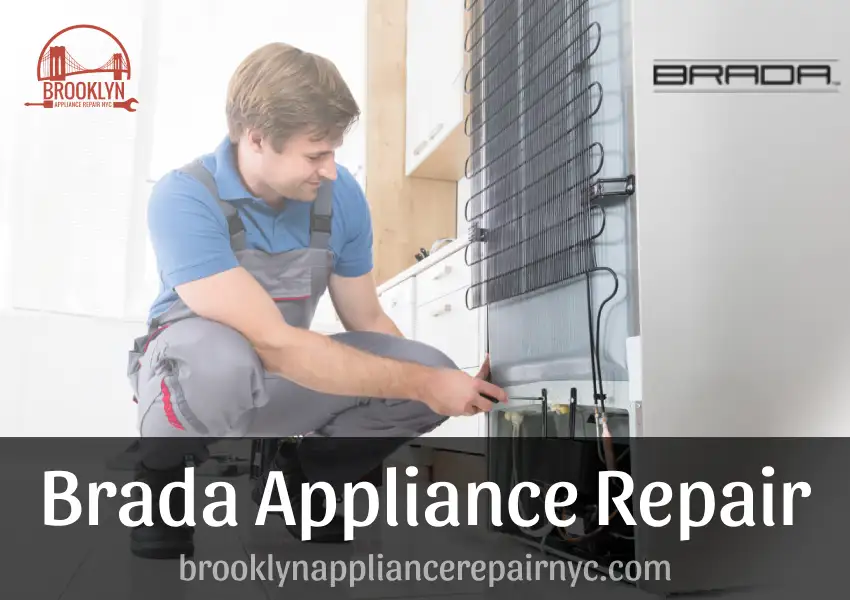
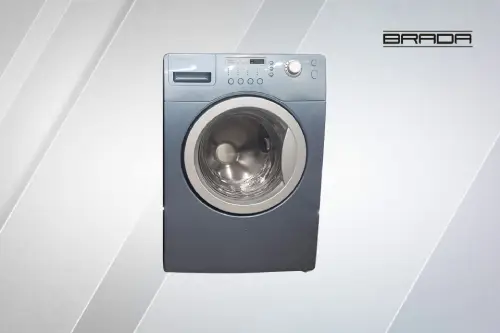
Brada Portable & Compact Washer Repair
Brada portable and compact washers are top-load, mechanically-timed machines, so drain and spin faults usually come down to three parts: the water inlet valve, the drain pump, and the lid switch. When a Brada washer fills slowly, won’t drain, or refuses to spin, we test each of those directly instead of chasing a control board.
The lid switch in particular stops the spin cycle the moment it fails — a common, inexpensive fix. We confirm the switch, pump, and valve individually so the repair matches the actual failure and not just the symptom.
Common issues we fix:
- Washer won’t drain, water left in the tub
- Tub won’t spin or agitate
- Fills slowly or won’t fill at all
- Leaking from the fill hose or pump
- Stops the moment the lid is closed
- Loud grinding from the drain pump
Brada Symptom → How We Diagnose It
Brada compact units have no digital display and no stored error codes, so there is no code chart to read. Instead, our technicians work from the symptom you see to the specific component we test. Because these are low-cost machines, some faults are genuine repair-vs-replace judgment calls — we tell you honestly which way the math points before any parts are ordered.
Compact Refrigeration — Fridge, Freezer & Cooler
| Symptom | How We Diagnose It |
|---|---|
| Runs constantly, cabinet never cold | Test the cold-control thermostat for continuity across the dial range and confirm it calls the compressor at temperature |
| Compressor only hums or clicks, won’t start | Check the PTC start relay and overload protector on the compressor, then verify compressor winding resistance |
| Warm upper shelves / uneven cooling | Inspect the condenser and evaporator fan for stall, noise, or debris blocking airflow |
| Sweating cabinet, heavy frost, long run times | Check the door / lid gasket seal contact and hinge alignment for warm-air infiltration |
| No cooling at all after normal run | Evaluate the sealed system under EPA Section 608; often a repair-vs-replace decision on a budget unit |
Portable & Compact Washer
| Symptom | How We Diagnose It |
|---|---|
| Fills slowly or won’t fill | Test the water inlet valve for coil continuity and check the inlet screens for blockage |
| Won’t drain, water left in the tub | Check the drain pump for a seized impeller, debris, or an open winding |
| Won’t spin, stops when lid closes | Test the lid switch for continuity in the closed position and inspect its actuator |
| Leaking during fill or wash | Trace to the fill hose, pump housing, or tub seal and confirm the true leak point before repair |
Technician Case Studies — Brada Repairs

Diagnostic & Resolution: Tested the cold-control thermostat — contacts closed but never cycling; the sensing bulb had lost charge. Replaced the cold-control thermostat, confirmed the compressor cycled correctly, and verified cabinet pulled down to 38°F over the next hour.
Diagnostic & Resolution: Bench-tested the lid switch — no continuity in the closed position. Replaced the lid switch and actuator, ran a full drain-and-spin cycle, and confirmed the tub reached spin speed with the lid latched.
Diagnostic & Resolution: Found the lid gasket crushed flat along the front edge, letting warm air in and driving heavy frost. Replaced the gasket, cleaned the condenser, and confirmed normal compressor run time and a firm seal on all four sides.
Diagnostic & Resolution: Evaporator fan motor was stalled from a worn bushing, killing air circulation to the upper cabinet. Replaced the fan motor, verified even airflow, and measured a consistent 41°F top to bottom on the mid setting.
Diagnostic & Resolution: Tested the PTC start relay — open circuit; compressor windings measured within spec. Replaced the start relay and overload, confirmed a clean start, and verified steady pull-down to temperature.
Diagnostic & Resolution: Pulled the drain pump and found the impeller seized on a lodged coin. Cleared the obstruction, confirmed the pump winding was intact, reassembled, and verified full drainage in under 90 seconds on a test cycle — no part needed.
Frequently Asked Questions — Brada Appliance Repair
What Brada appliances do you repair?
My Brada fridge isn’t showing an error code — how do you diagnose it?
Is a Brada unit worth repairing, or should I replace it?
What Brada problems do you fix most often?
How much does Brada appliance repair cost?
Address
Brooklyn, NY 11238
Manhattan, Staten Island
Appliance Repair
Payment Options