
 Refrigerator Repair
 Dishwasher Repair
 Washer Repair
 Dryer Repair
 Oven Repair
 Stove/Cooktop Repair
 Freezer Repair
 Appliance Installation
 Samsung
 Bosch
Bosch
 Thermador
 Miele
Miele
 Sub Zero
 Bloomberg
 Asko
Asko














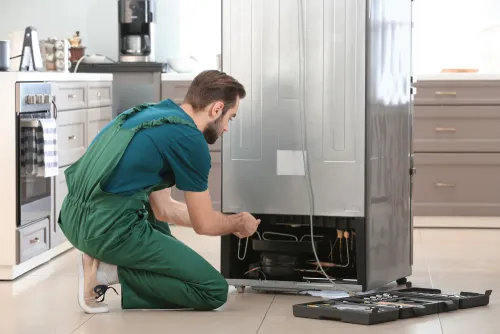
Avanti Appliance Repair Services
Your Local Avanti Compact-Appliance Repair Company
- Mini fridge runs but won’t get cold
- Beverage/wine cooler warming and buzzing
- Compact washer won’t drain or fill
- Chest freezer holding temperature poorly
- Compressor clicks on then off (relay)
- Torn or hardened door gasket, condensation
- Condenser or evaporator fan not spinning
- Compact range burner or element not heating
- Countertop microwave turntable / no heat
- Excess frost on a manual-defrost model


Article Reviewed & Technically Verified by Dmitry V., Lead EPA-Certified Technician (15+ Years Experience)
Avanti Products builds value-priced compact appliances — mini and counter-depth refrigerators, beverage and wine coolers, chest and upright freezers, compact ranges, countertop microwaves, and portable washers and dryers. Most of these units use simple mechanical cold-control thermostats and sealed compressor systems rather than digital diagnostic boards, so we troubleshoot them by symptom and component testing, not by reading an error code off the display. Brooklyn Appliance Repair NYC repairs Avanti units the same day across Brooklyn and the surrounding boroughs.
Our Happy Customers






- 15+ Years Experience
- Warranty on Parts & Labour
- 100% client satisfaction
- Skilled Technicians
Our Avanti Appliance Repair Services
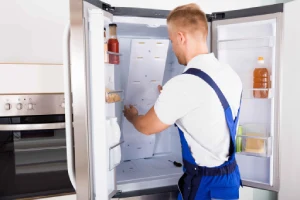
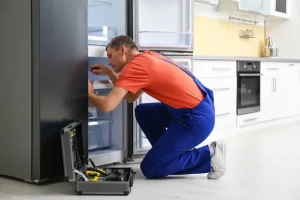
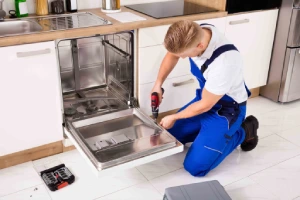
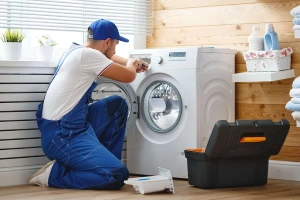
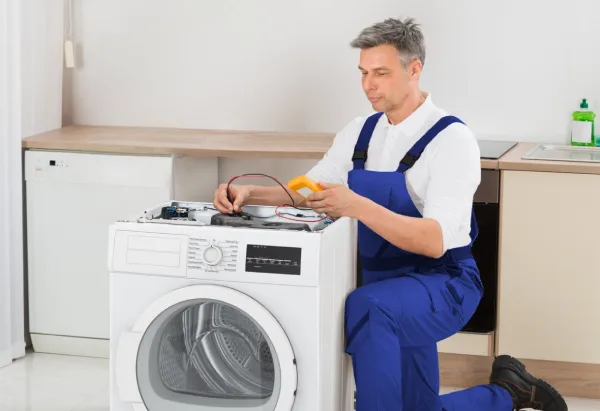
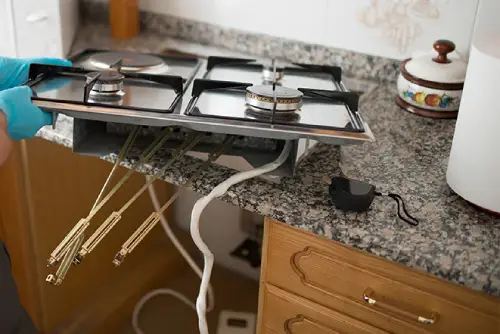
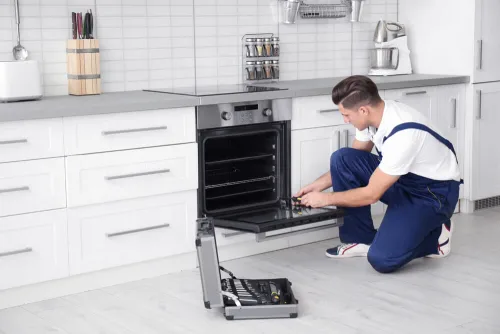
Avanti Refrigerator & Beverage Cooler Repair
Avanti compact refrigerators — mini units like the RM16J0W (1.6 cu. ft.) and AR2416B (2.2 cu. ft.), and counter-depth top-freezer models like the RA75V3S — rely on a single compressor, a mechanical cold-control thermostat, and a start relay rather than an inverter or a control board. When one warms up, we check those parts in order instead of guessing.
Beverage and wine coolers such as the WBC16Z1B-IS and the ELITE-series WCDD108E3S add a condenser fan and, on thermoelectric models, a Peltier module — both common causes of a unit that hums but won’t hold temperature. Because sealed-system work (compressor, refrigerant) is EPA Section 608 regulated, that portion is always handled by a certified technician.
Common issues we fix:
- Runs constantly but won’t get cold
- Compressor clicks on and off (start relay/overload)
- Wine/beverage cooler warming, fan noisy or stopped
- Frost buildup on a manual-defrost model
- Water pooling under the crisper
- Torn or hardened door gasket, condensation on the cabinet
- Interior light works, cooling does not
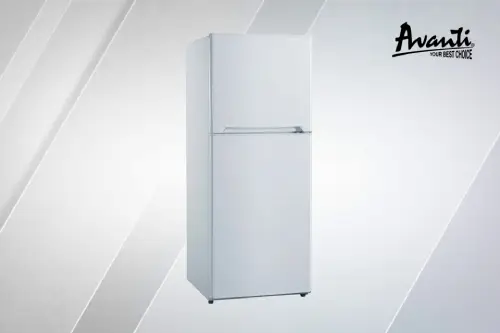
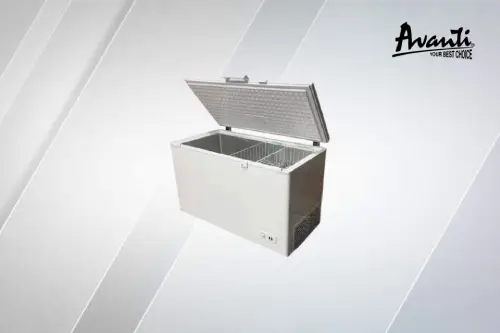
Avanti Freezer Repair
Avanti chest and upright freezers — models such as the CF7F0W (7.0 cu. ft.) and CF10F0W (10.0 cu. ft.) — are usually manual-defrost with a mechanical cold control. A freezer that runs nonstop but softens usually points to a weak start relay, a restricted condenser, or a failing cold-control thermostat rather than a defrost board.
Because these are lower-cost units, we’re upfront about the repair-versus-replace math: if a sealed-system leak is confirmed on an entry-level chest freezer, recovery, repair, and recharge can approach the price of a new unit, and we’ll tell you that before any work begins.
Common issues we fix:
- Not freezing or only partially freezing
- Runs constantly, cabinet warm to the touch
- Heavy frost or ice sheets (manual defrost)
- Buzzing or clicking at the compressor
- Lid or door gasket not sealing
- Water pooling at the base
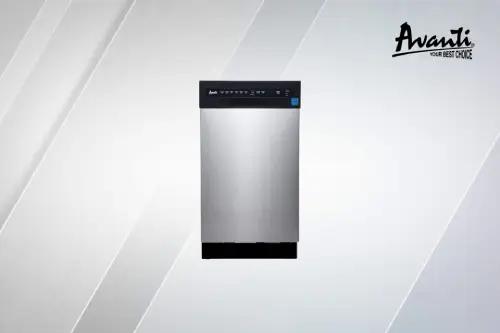
Avanti Dishwasher Repair
Avanti compact and countertop dishwashers plumb into the kitchen faucet or a standard supply line and share the same wear points as full-size units on a smaller scale: the water inlet valve, the drain pump, and the float switch. When one won’t drain or leaves dishes wet, we test each of those in turn rather than replacing the control.
Leaks on these units most often trace to the fill hose coupler or a tired door seal, not the tub. We find the actual source so the floor stays dry after we leave.
Common issues we fix:
- Won’t drain / standing water in the base
- Won’t fill or fills slowly (inlet valve/float)
- Leaks at the faucet coupler or door
- Dishes come out cloudy or still soiled
- Won’t start or stops mid-cycle
- Door latch not holding
Avanti Washer Repair
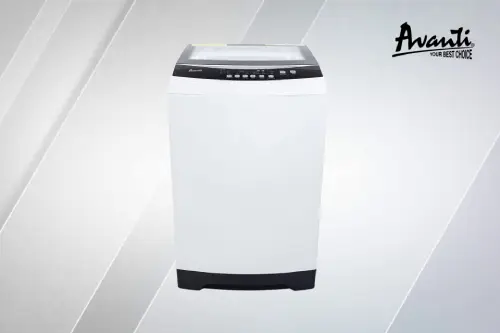
Avanti portable and compact top-load washers — models like the CTW84X0W-IS (0.84 cu. ft.) and CTW14X0W-IS (1.38 cu. ft.) — are built for apartments without hookups and drain through a small pump. A machine that won’t drain almost always has a clogged or seized drain pump; one that won’t fill points to the inlet valve or the lid switch.
Off-balance shaking on the spin cycle is usually a suspension or leveling issue on these lightweight cabinets rather than a control fault, and we confirm it with a test load before recommending parts.
Common issues we fix:
- Won’t drain (drain pump / clogged filter)
- Won’t fill or overfills (inlet valve/float)
- Won’t start or won’t spin (lid switch)
- Walks or bangs during spin
- Leaks at the fill hose or pump housing
- Stops mid-cycle
Avanti Dryer Repair
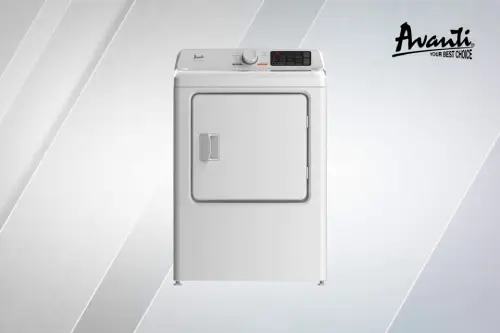
Avanti compact dryers, including ventless condensing models, dry slowly when the condenser channel or lint path is restricted or the heating element weakens. We check heater continuity, airflow, and the thermal cutoff so the unit dries in one cycle instead of three.
On ventless units, a full water-collection tank or a blocked condenser will stall a cycle without any mechanical failure — we verify that first before opening the cabinet, which keeps the repair honest and the cost down.
Common issues we fix:
- No heat or weak heat (element/thermal cutoff)
- Takes several cycles to dry
- Drum not turning (belt/motor)
- Ventless unit stopping early (full tank/blocked condenser)
- Overheating or burning smell
- Won’t start
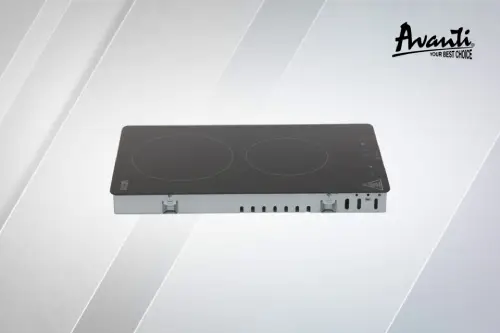
Avanti Cooktop Repair
Avanti makes compact electric, gas, and combination cooktops for tight kitchens. On electric models a dead element is usually the element or the infinite switch behind the knob; on gas models a burner that won’t light is typically the igniter or a clogged burner port. We diagnose the specific part rather than swapping the whole top.
For any gas cooktop we check the burner flame and connections for safe operation before the unit goes back in service; a gas smell or a burner that won’t stay lit is treated as a safety-first call.
Common issues we fix:
- Element or burner won’t heat
- Gas burner won’t ignite / keeps clicking
- Uneven or weak heat (infinite switch)
- Knob or control not responding
- Cracked glass surface (assessment and options)
- Burner flame too high or low (gas)
Avanti Range & Stove Repair
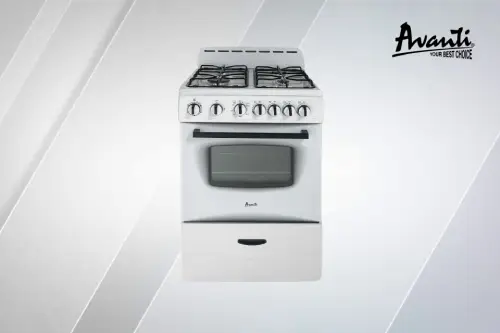
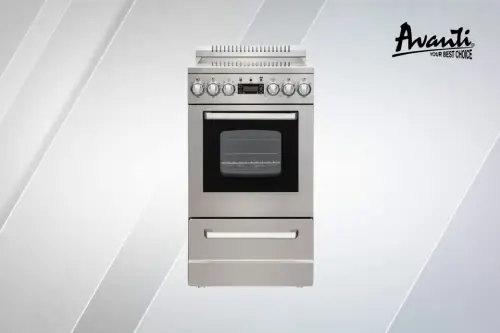
Avanti compact ranges pair a cooktop with a small oven in gas and electric versions. A range burner that won’t light, or an oven that won’t reach temperature, usually traces to the igniter, the bake element, or the safety valve — components we test directly with a meter.
Because these are simple electromechanical ranges without a diagnostic display, accurate temperature and continuity testing is what separates a real fix from a parts-swap. We verify the range holds its set point before closing the ticket.
Common issues we fix:
- Surface burner not lighting or heating
- Oven not reaching temperature (element/igniter)
- Gas smell or weak flame (gas models)
- Knobs or controls not working
- Range won’t power on
- Uneven baking
Avanti Oven & Microwave Repair
Avanti compact ovens and countertop microwaves round out the lineup. A compact oven that underbakes usually has a failing bake element or a drifting thermostat; a microwave that runs but doesn’t heat typically has a failed magnetron or high-voltage diode — a repair we assess against the unit’s low replacement cost before recommending it.
We test heating output and temperature accuracy after any element or thermostat replacement so the oven performs to spec, not just “warmer than before.”
Common issues we fix:
- Oven not heating or slow to preheat
- Bakes unevenly / runs hot or cold
- Microwave runs but doesn’t heat (magnetron/diode)
- Turntable not turning
- Door won’t seal or latch
- Controls unresponsive
How We Diagnose Avanti Units — Symptom to Test
Most Avanti compact appliances do not display digital fault codes, so there is no code to “look up.” Instead our technicians work from the symptom to the component, testing each part with a meter. The tables below show how we trace the most common failures. For any model we cross-reference the original use-and-care guide from Avanti’s official product-documents library to confirm wiring and part specifics before we order parts.
Refrigeration — Fridges, Coolers & Freezers
| Symptom | How We Diagnose It |
|---|---|
| Runs constantly, won’t get cold | Check condenser for dust restriction and test the cold-control thermostat for continuity through its range; confirm the compressor is actually running, not just humming. |
| Compressor clicks on then off | Test the start relay & overload at the compressor terminals; a failed relay is a frequent, low-cost fix on Avanti minis before condemning the compressor. |
| Cooler warm, fan noisy or stopped | Verify voltage to the condenser/evaporator fan and check the blade for obstruction; on thermoelectric coolers, test the Peltier module draw. |
| Condensation / poor seal | Inspect the door gasket with a dollar-bill drag test and check hinge alignment; a hardened or torn gasket is replaced rather than the door. |
| Not cold at all, no compressor run | Sealed-system evaluation. Any refrigerant work is performed under EPA Section 608; on entry-level units we present the repair-vs-replace cost honestly first. |
Compact Laundry & Dishwashers
| Symptom | How We Diagnose It |
|---|---|
| Won’t drain / standing water | Inspect and bench-test the drain pump and filter for debris or a seized impeller — the single most common compact-washer and countertop-dishwasher fault. |
| Won’t fill or fills slowly | Test the water inlet valve for coil continuity and verify supply pressure; clear the inlet screen before replacing the valve. |
| Overfills or won’t advance | Check the float / pressure switch for a stuck float or a blocked pressure hose that reports a false water level. |
| Won’t start / won’t spin | Test the lid switch and door latch continuity — a safety interlock that stops the cycle when open and is a common failure point. |
| Leaks at the base | Trace to the fill-hose coupler, pump housing, or tub boot; we locate the actual origin rather than replacing the hose on assumption. |
Because Avanti is a value brand, some faults on the lowest-cost units are genuine repair-versus-replace judgment calls — we’ll always give you the honest number before doing the work.
Technician Case Studies — Avanti Repairs

Diagnostic & Resolution: Compressor attempting to start then cutting out. Tested the start relay & overload at the compressor terminals — relay open. Replaced the start relay; compressor pulled in and box reached 38°F within the hour. No sealed-system work required.
Diagnostic & Resolution: Confirmed voltage present at the condenser fan but blade stalled; motor bearing seized. Replaced the fan motor, cleared dust from the condenser, and verified the cabinet returned to the 40s°F set range by evening.
Diagnostic & Resolution: Condenser clear; tested the cold-control thermostat — no continuity at any setting, leaving the compressor commanded on continuously without proper cycling. Replaced the cold control; unit cycled normally and held 0°F on a follow-up check.
Diagnostic & Resolution: Removed the pump filter — drain pump impeller fouled with lint and a coin, motor straining. Cleared the debris and confirmed the impeller spun freely; full drain completed in under 90 seconds on a test cycle. No parts needed.
Diagnostic & Resolution: Dollar-bill drag test showed the door gasket had hardened and lost seal along the hinge side. Replaced the gasket and squared the door alignment; seal held on all four sides and interior temperature stabilized.
Diagnostic & Resolution: Verified supply pressure was fine, then tested the water inlet valve — no continuity across the fill coil. Cleared the inlet screen and installed a new inlet valve; normal fill and full cycle confirmed before leaving.
Frequently Asked Questions — Avanti Appliance Repair
What Avanti appliances do you repair?
My Avanti unit has no error code on the display — can you still diagnose it?
Is it worth repairing a low-cost Avanti unit, or should I replace it?
Do Avanti refrigerator and freezer repairs need an EPA-certified technician?
How much does Avanti appliance repair cost?
Address
Brooklyn, NY 11238
Manhattan, Staten Island
Appliance Repair
Payment Options