
 Refrigerator Repair
 Dishwasher Repair
 Washer Repair
 Dryer Repair
 Oven Repair
 Stove/Cooktop Repair
 Freezer Repair
 Appliance Installation
 Samsung
 Bosch
Bosch
 Thermador
 Miele
Miele
 Sub Zero
 Bloomberg
 Asko
Asko














Avantgarde Appliance Repair Services
Your Local Avantgarde Appliance Repair Company
- Refrigerator compressor or fan noise
- Door seal leaking or not sealing
- Cooling or freezing system failure
- Electronic control unresponsive
- Freezer excessive frost buildup
- Temperature inconsistency
- Display or touchpad not responding
- Appliance not starting
- Oven or element not heating
- Dishwasher or washer not draining


Article Reviewed & Technically Verified by Dmitry V., Lead EPA-Certified Technician (15+ Years Experience)
Avantgarde (also branded AVG) is a lesser-known North American import brand best recognized for wine cellars, ventilation/range hoods, and a smaller line of refrigeration and cooking appliances — not a mass-market name, so it needs a technician who works from the model and serial plate rather than assumptions. Brooklyn Appliance Repair NYC diagnoses and repairs Avantgarde units with same-day service across Brooklyn and the surrounding boroughs.
Because Avantgarde is an uncommon brand with limited published documentation, parts sourcing often starts by identifying the original manufacturing platform stamped on the unit’s rating plate. Once we confirm the platform, we match the correct component and complete most repairs in a single visit. Every job is backed by a warranty of up to 90 days on parts and labor.
Our Happy Customers







- 15+ Years Experience
- Warranty on Parts & Labour
- 100% client satisfaction
- Skilled Technicians
Our Avantgarde Appliance Repair Services
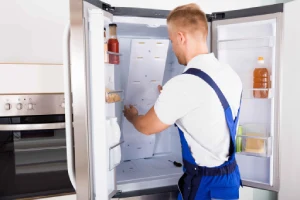
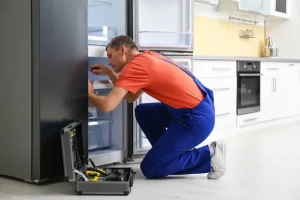
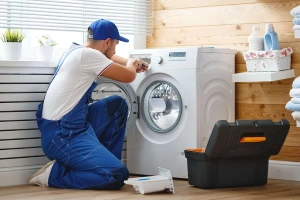
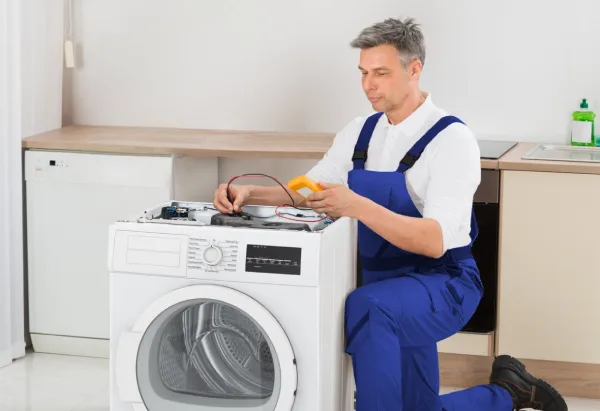
Avantgarde Refrigerator Repair
Avantgarde’s refrigeration is where the brand is best established, so a fridge that runs warm on the fresh-food side while the freezer stays cold usually points to airflow or a defrost fault rather than the compressor itself. We read the evaporator frost pattern, test the fan motors, and check the defrost heater and thermistor before touching the sealed system. Any refrigerant work is done under EPA Section 608 recovery procedures.
When the fault is a leak or a control problem, we trace it to the actual source instead of swapping parts by guesswork. Genuine refrigerator repair on an uncommon brand starts with reading the rating plate to identify the correct replacement component.
Common issues we fix:
- Fresh-food section warm, freezer cold
- Compressor cycling too often or running constantly
- Water leaking under drawers or onto the floor
- Loud humming, rattling, or fan noise
- Frost buildup on the back wall or coils
- Door not sealing, condensation around the gasket
- Control panel unresponsive
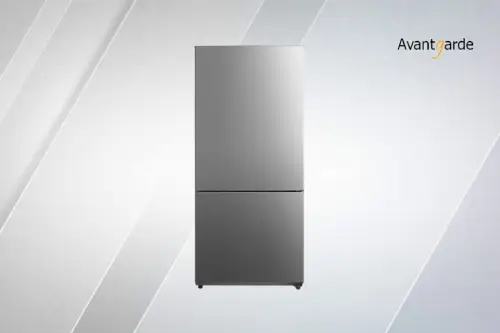
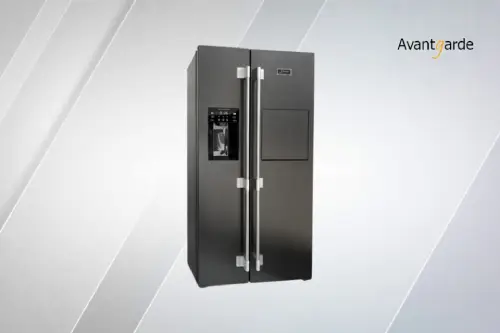
Avantgarde Freezer Repair
An Avantgarde freezer that runs nonstop but holds temperature poorly almost always has a defrost-system fault or an airflow restriction from ice on the evaporator. We test the defrost heater continuity, the defrost thermostat, and the evaporator fan to find which link in the chain has failed, then confirm the door gasket is sealing evenly.
Sealed-system symptoms are diagnosed with gauges under EPA Section 608 procedures, never by assumption. We restore stable temperature and address the cause so the frost does not simply return in a week.
Common issues we fix:
- Heavy frost or ice sheets on the evaporator
- Not freezing or weak freezing
- Freezer runs constantly
- Clicking, buzzing, or fan noise
- Door not closing smoothly
- Temperature swings
- Water pooling or ice clumps
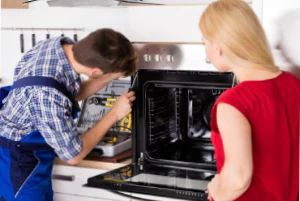
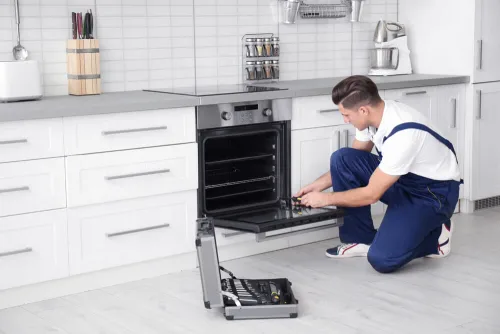
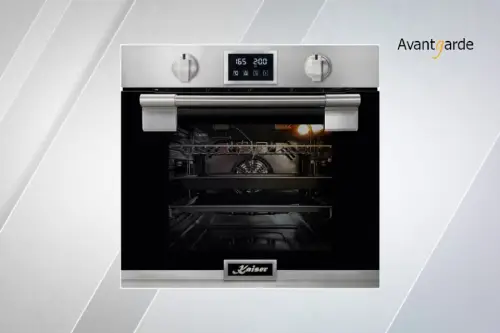
Avantgarde Oven Repair
An Avantgarde oven that underbakes, overbakes, or will not hold a set temperature usually has a failing temperature sensor or a control-board fault, not a dead element. We measure the oven temperature sensor’s resistance against the manufacturer’s spec value, test the bake and broil elements for continuity, and verify the convection fan before recommending any part.
On gas oven models we also confirm the igniter draws enough current to open the safety valve. Temperature accuracy is checked with a calibrated thermocouple after any heating component is replaced.
Common issues we fix:
- Not heating or slow to preheat
- Runs too hot or too cold
- Broiler not working
- Convection fan not running
- Door won’t close or seal properly
- Odors or smoke during use
- Oven shuts off mid-bake
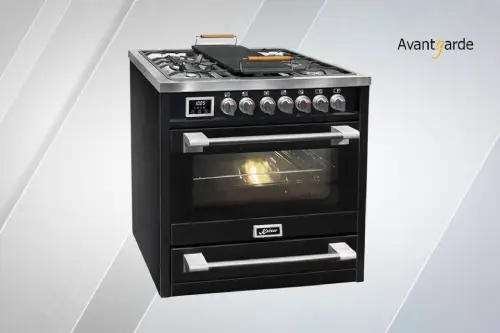
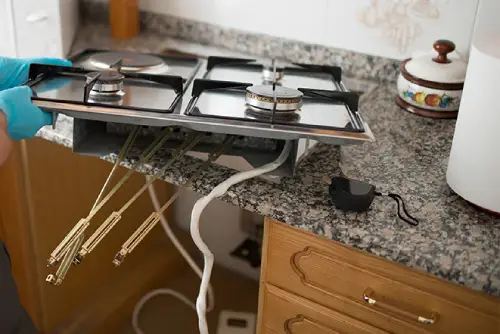
Avantgarde Stove Repair
Avantgarde stove and range problems tend to build gradually — a burner that heats slowly, a surface element that won’t hold heat, or controls that become intermittent. On electric models we test element and infinite-switch continuity; on gas models we check the igniter spark and the gas valve, and we leak-test every connection before the unit goes back in service.
Intermittent shutdowns and control faults are isolated by testing switches, relays, and the control board directly rather than replacing boards on spec.
Common issues we fix:
- Burners not lighting or not heating
- Temperature inconsistent across elements
- Smell of gas or weak flame (gas models)
- Stove won’t power on
- Control knobs not working properly
- Igniter keeps clicking
- Electrical sparking or tripping the breaker
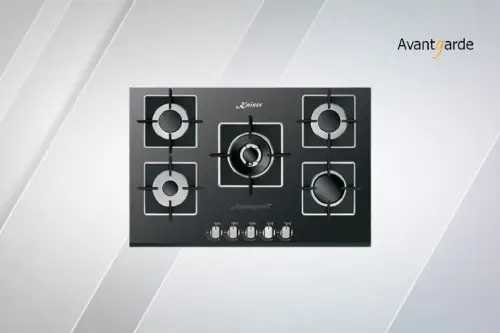
Avantgarde Cooktop Repair
Avantgarde electric and induction cooktops can develop uneven heating, unresponsive touch controls, or a single dead zone. We check surface-element continuity and the control-board input, and on induction models we verify cookware detection and the internal cooling fan — both have to work for the unit to be safe to use. Where a model uses gas, we test the igniter and burner gas flow before leaving.
We diagnose the specific component at fault — ignition, heating element, or control module — instead of condemning the whole cooktop.
Common issues we fix:
- Element won’t heat or heats unevenly
- Induction not detecting cookware
- Cooktop won’t turn on
- Cracked glass (assessment and options)
- Touch controls or indicator lights not responding
- Burner won’t ignite / keeps clicking (gas models)
- Knobs loose or stuck
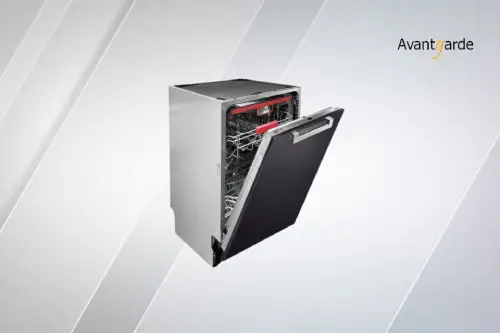
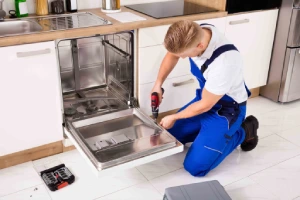
Avantgarde Dishwasher Repair
When an Avantgarde dishwasher leaves standing water or comes out with dirty dishes, the usual culprits are the drain pump, the circulation pump, or a clogged filter. We test each pump individually, clear the filter and drain hose, and check the float switch and door gasket before recommending any replacement.
Leaks are traced to their origin — door seal, pump housing, or supply connection — so the repair addresses the real failure point rather than the visible puddle.
Common issues we fix:
- Not draining / standing water
- Leaks from the door or bottom
- Dishes come out cloudy or greasy
- Won’t fill or fills too slowly
- Stops mid-cycle
- Spray arms not spinning
- Door latch or control faults
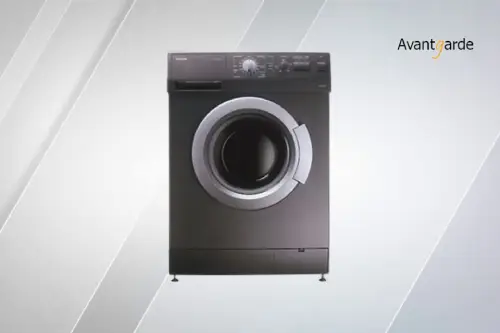
Avantgarde Washer Repair
Avantgarde washers that won’t drain, won’t spin, or leak have usually failed at a specific point — the drain pump, the door-lock switch, or a worn seal. We test the fill valve, drain pump, and lock mechanism, and inspect the door boot and pump housing for the actual leak source instead of replacing parts speculatively.
Excessive shaking is diagnosed by checking the suspension and balance system so the machine sits and spins the way it should after the repair.
Common issues we fix:
- Won’t drain / won’t spin
- Leaking from the door or underneath
- Excessive shaking or walking
- Door won’t lock or won’t open
- Fills slowly / won’t fill
- Odors from trapped residue
- Stops mid-cycle
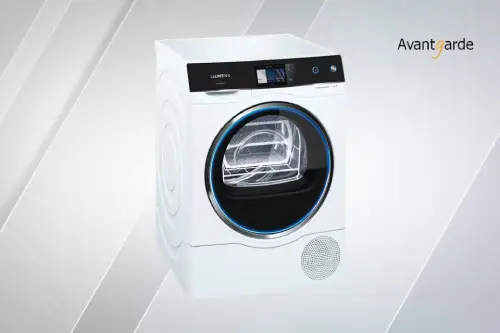
Avantgarde Dryer Repair
An Avantgarde dryer that leaves clothes damp or takes far too long usually has a heating fault or a blocked vent, not a dead motor. On electric models we test the heating element, thermal fuse, and cycling thermostats; on gas models we check the igniter and gas valve. In both cases we confirm the vent airflow and moisture sensor before condemning any part.
Unusual noise typically traces to drum rollers, the idler pulley, or the blower wheel — components we test and replace directly.
Common issues we fix:
- No heat or insufficient heat
- Takes too long to dry
- Stops mid-cycle or won’t start
- Burning smell or overheating
- Loud squeal, thump, or scraping
- Drum not turning
- Moisture sensor not detecting dryness
Avantgarde Symptoms — How We Diagnose Them
Because Avantgarde publishes little public service documentation and does not use a widely referenced error-code system, we work from the symptom and the model/serial plate rather than a code lookup. The table below shows the diagnostic path our technicians actually follow for the most common complaints, by appliance type.
| Appliance & Symptom | How We Diagnose It |
|---|---|
| Refrigerator — fresh food warm, freezer cold | Read evaporator frost pattern, test evaporator fan motor, and check defrost heater and thermistor before evaluating the sealed system under EPA Section 608 procedures. |
| Freezer — heavy frost, runs constantly | Test defrost heater continuity, defrost thermostat, and evaporator airflow; verify the door gasket seals evenly. |
| Oven — bakes unevenly, won’t hold temperature | Measure oven temperature-sensor resistance against the manufacturer’s spec, test bake/broil element continuity, and verify convection; confirm accuracy with a calibrated thermocouple. |
| Stove/Range — burner won’t heat or won’t ignite | Electric: test element and infinite-switch continuity. Gas: check igniter spark and gas valve, then leak-test all connections. |
| Cooktop — zone dead or touch unresponsive | Check surface-element continuity and control-board input; on induction, verify cookware detection and the internal cooling fan. |
| Dishwasher — won’t drain or leaks | Test drain and circulation pumps individually, clear filter and drain hose, and check the float switch and door gasket. |
| Washer — won’t spin/drain or leaks | Test drain pump and door-lock switch, inspect the door boot and pump seals, and check the suspension for excessive vibration. |
| Dryer — no heat or long dry times | Electric: test heating element, thermal fuse, and thermostats. Gas: check igniter and valve. Both: verify vent airflow and the moisture sensor. |
If your unit is showing a code on its display, note exactly what appears and read it to us when you call — on an uncommon brand we cross-reference the code against the identified manufacturing platform rather than guessing at its meaning.
Technician Case Studies — Avantgarde Repairs

Diagnostic & Resolution: Read the rating plate to identify the platform, then found a seized evaporator fan motor blocking cold-air circulation to the upper cabinet. Replaced the fan motor with the matched component and confirmed fresh-food temperature returned to the normal range on a follow-up reading.
Diagnostic & Resolution: Measured the oven temperature sensor’s resistance and found it reading out of range against the spec value at ambient. Replaced the sensor and re-verified temperature against a calibrated thermocouple before closing the job.
Diagnostic & Resolution: Isolated the drain pump and found the impeller jammed with debris. Cleared the housing, replaced the impeller, and confirmed full drainage on two back-to-back test cycles.
Diagnostic & Resolution: Tested the zone’s element coil and pan-detection circuit, confirmed the internal cooling fan was running, and replaced the faulty coil assembly matched to the board. Verified detection and heating on all zones before leaving.
Diagnostic & Resolution: Traced the leak to a hairline tear in the door boot seal that dripped only under spin pressure. Replaced the boot and retaining clamps and ran two back-to-back cycles with no further leakage.
Frequently Asked Questions — Avantgarde Appliance Repair
What Avantgarde appliances do you repair?
Avantgarde is an uncommon brand — can you still get parts?
Do you handle both gas and electric Avantgarde appliances?
Is there a warranty on Avantgarde repairs?
How much does Avantgarde appliance repair cost?
Address
Brooklyn, NY 11238
Manhattan, Staten Island
Appliance Repair
Payment Options