
 Refrigerator Repair
 Dishwasher Repair
 Washer Repair
 Dryer Repair
 Oven Repair
 Stove/Cooktop Repair
 Freezer Repair
 Appliance Installation
 Samsung
 Bosch
Bosch
 Thermador
 Miele
Miele
 Sub Zero
 Bloomberg
 Asko
Asko














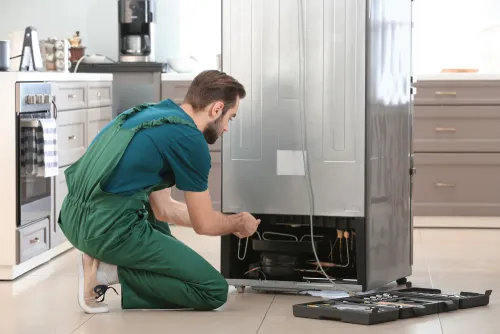
AEG Appliance Repair Services
Your Local AEG Appliance Repair Company
- AEG L7WEE961R washing machine E21 drain timeout
- AEG BPE948730M oven F5 control board failure
- AEG dishwasher i30 safety float activation
- AEG ProSteam oven heating element failure
- AEG washer E35 water pressure sensor fault
- AEG ÖKOMix front-load drum bearing failure
- AEG ComfortLift dishwasher i50 wash motor fault
- AEG induction hob E5 IGBT overtemperature fault
- AEG T8 heat-pump dryer condensate tank pump failure
- AEG SCE818E6TS NoFrost fridge cooling fan fault

Article Reviewed & Technically Verified by David Z., Lead EPA-Certified Technician (15+ Years Experience)
AEG is the German premium tier of Electrolux Group, so its washers, ovens, and dishwashers share Electrolux platform engineering and OEM parts — while adding AEG-only systems like ÖKOMix detergent premixing, the ComfortLift dishwasher basket, and heat-pump drying. Faults report as coded faults: E-codes on washers, i-codes on dishwashers, F-codes on ovens. Brooklyn Appliance Repair NYC diagnoses them by measuring sensor resistance and pump current draw rather than swapping parts, and finishes most AEG repairs the same day at (917) 997-5264.
Our Happy Customers

- 15+ Years Experience
- Warranty on Parts & Labour
- 100% client satisfaction
- Skilled Technicians
Our AEG Appliance Repair Services
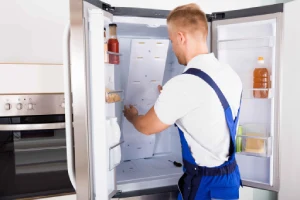
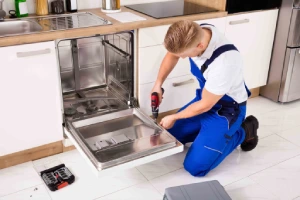
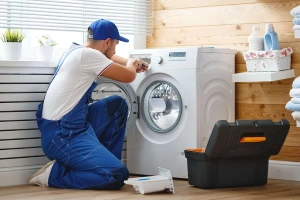
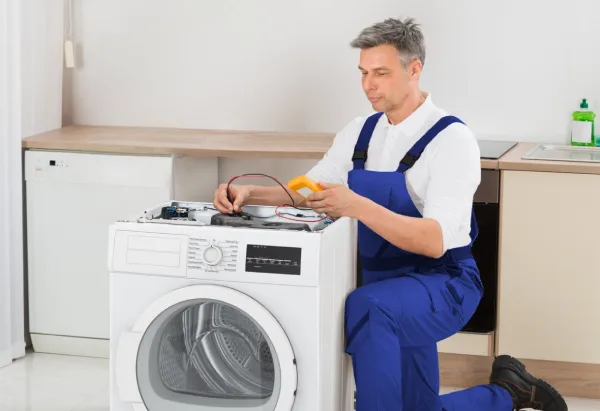
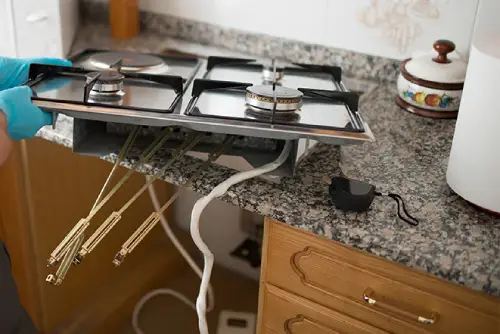
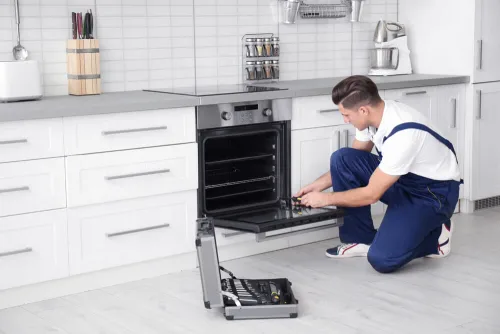
AEG Fridge Repair
AEG refrigerators are frost-free (NoFrost) built-in units, so a fresh-food compartment that drifts warm while the freezer stays cold is almost always the internal circulation fan or a defrost fault, not the compressor. We test the cooling-fan motor and the defrost heater and thermostat before ever opening the sealed system.
Because these are integrated European cabinets, door alignment and gasket seal matter more than on freestanding models — a sagging integrated door lets warm air in and drives condensation. We re-align the door carrier and hinges as part of the repair.
Common issues we fix:
- Fresh-food side warm, freezer still cold
- Circulation fan grinding or stalled
- Frost returning after defrost
- Temperature or door alarm sounding
- Compressor running nonstop
- Integrated door sagging / not sealing
- Condensation inside the cabinet
- Control panel unresponsive
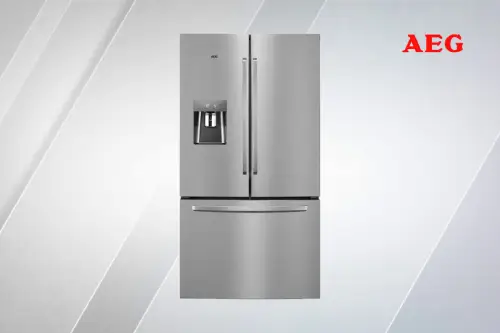
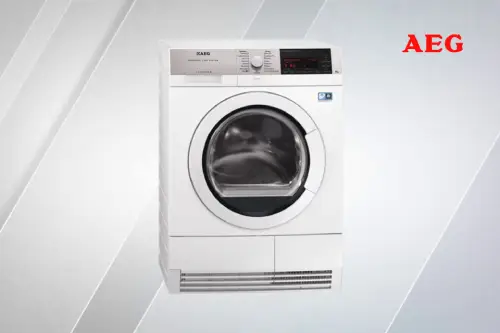
AEG Dryer Repair
AEG dryers are almost all heat-pump (AbsoluteCare) condenser machines, which means no vent — drying performance depends on a clean heat exchanger and a working condensate pump. When cycles stretch past two hours, an E52 condenser warning usually means the exchanger fins are lint-choked; we flush the condenser and confirm airflow rather than condemning the heat pump.
A dryer that runs but leaves the tank empty or floods the base has a condensate-pump or float fault. We test the pump and float switch directly so the water actually clears each cycle.
Common issues we fix:
- E52 condenser warning / very long cycles
- Clothes still damp at cycle end
- Condensate tank not filling or overflowing
- Heat pump not heating
- Drum not turning
- Fluff-filter and airflow warnings
- Rattle or knock from the compressor mount
- Control lockups and error codes
AEG Dishwasher Repair
AEG dishwashers — including ComfortLift models that raise the lower basket to counter height and AirDry units that pop the door open to dry — use the Electrolux i-series fault system. An i30 shutdown means the base-pan safety float has tripped on water it shouldn't see, so we find the upstream leak before clearing it; an i50 points at the wash-pump motor or a jammed impeller.
An i20 drain timeout is usually a blocked filter or check valve, and an i10 is the inlet valve or low pressure. We test each part during every AEG dishwasher repair, and check the ComfortLift lift mechanism where fitted.
Common issues we fix:
- i30 safety float trip / standing water
- i50 wash-motor fault
- i20 drain timeout
- i10 won't fill / fills slowly
- ComfortLift basket not raising/lowering
- Dishes cloudy or still greasy
- i60 no heat / poor drying
- Door latch or control faults
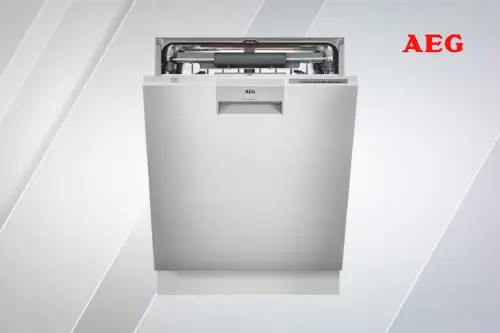
AEG Freezer Repair
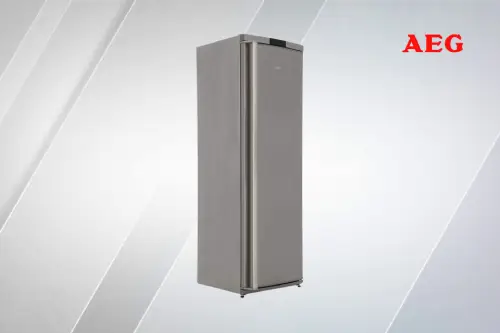
AEG freezers use a NoFrost circulation system, so constant running with heavy frost usually signals a failed defrost heater or thermostat letting ice blanket the evaporator. We test heater continuity and thermostat closing temperature to bring the compartment back to a stable set point.
A freezer that won't start at all often has a compressor start relay or overload at fault rather than the compressor itself — we test the relay and windings before recommending the more expensive sealed-system route.
Common issues we fix:
- Not freezing or weak freezing
- Compressor relay clicking, won't start
- Heavy frost or ice on the back panel
- Freezer runs constantly
- Drawer or door not sealing
- Temperature alarm sounding
- Water pooling or ice clumping
- Sensor and control faults
AEG Washer Repair
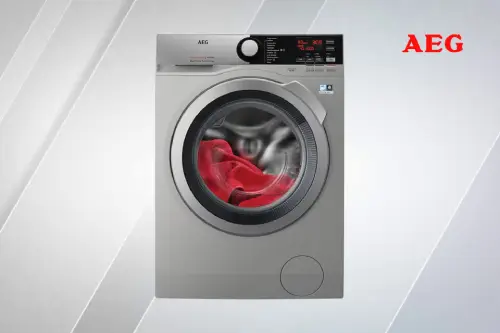
AEG front-load washers with ProSteam and ÖKOMix detergent premixing are precise, and their faults are specific: an E21 drain timeout, an E35 pressure-sensor error stalling the fill, or an E13 base-pan leak. On higher-mileage machines we also check the rear drum bearing, a known AEG front-loader wear point that shows up as a rumble on spin.
We test the drain pump current, the ProSense pressure/level circuit, and the ÖKOMix mixing chamber for leaks, tracing an E13 to its true origin rather than the visible puddle.
Common issues we fix:
- E21 won't drain / won't spin
- E35 pressure-sensor fill fault
- E13 leak from door or base
- Loud rumble or knocking on spin (drum bearing)
- E11 slow fill / won't fill
- Door won't lock or won't release
- Musty odor from trapped residue
- E68 heating-element earth-leakage fault
AEG Cooktop Repair
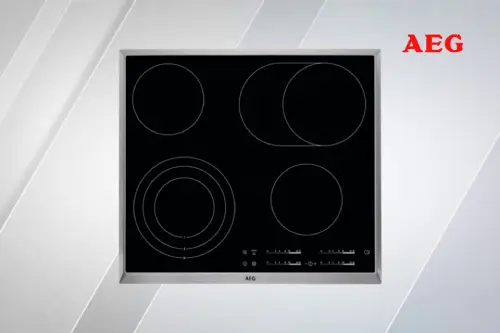
AEG induction hobs — including MaxiSense flexible-zone and Hob2Hood models — are power-electronics devices, so a zone that quits or an E5 overtemperature fault is usually a shorted IGBT power transistor on the coil driver board or a failed cooling fan, not the coil. We measure driver output and cooling airflow before replacing the power module.
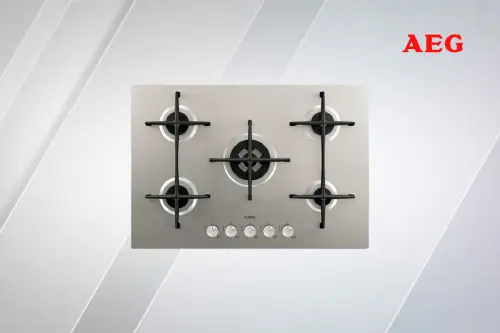
On ceramic and gas AEG cooktops we diagnose the specific fault — radiant element, touch-control ribbon, or spark module — and confirm the hob is safe to use before we leave.
Common issues we fix:
- E5 IGBT overtemperature / zone shutting off
- Single induction zone not responding
- Not detecting induction cookware
- Touch controls unresponsive or ghosting
- Uneven or weak heat across zones
- Cracked glass (assessment and options)
- Burner won't ignite / keeps clicking (gas)
- Error codes and control faults
AEG Stove Repair
AEG cookers pair an induction or ceramic top with a SteamBake oven below, and problems usually sit in one half or the other. When the oven underheats or the top loses a zone, we isolate whether the fault is in the shared control, the element, or the sensor rather than replacing the whole unit.
Temperature calibration is verified after any heating-component swap so the cooker holds its set point, and we test the top’s zones individually to confirm each responds correctly.
Common issues we fix:
- Oven not heating / slow to temperature
- Cooktop zone not working
- Oven temperature inconsistent
- Cooker won't power on
- Controls or programmer not responding
- SteamBake steam function not working
- Sparking or tripping the breaker
- F-series error codes on the display
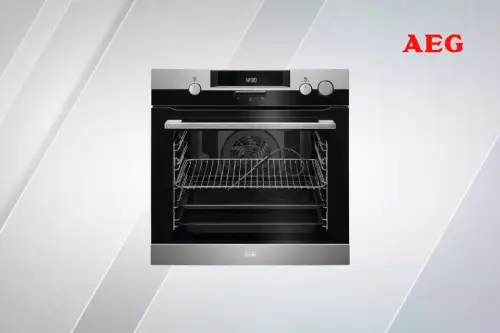
AEG Oven Repair
AEG built-in ovens — SteamBake, SteamBoost, and pyrolytic models — most often fail at the NTC temperature sensor (F7) or the control board (F5, a welded relay). An oven that won't reach temperature usually reads open on the sensor (~1,080Ω at room temp), which we measure rather than replacing the board on a guess.
A door that won't lock or release around a pyrolytic clean (F1/F2) is the latch motor or its switch. We inspect element, sensor, latch, and door seal together and confirm temperature accuracy before closing the job.
Common issues we fix:
- F7 temperature-sensor fault / won't reach temp
- F5 control-board relay failure
- F1/F2 door won't lock or unlock
- Not heating / slow preheat
- Steam function not producing steam
- Pyrolytic self-clean not starting
- Display or programmer failures
- Oven shuts off mid-bake
Common AEG Error Codes
AEG appliances display a specific fault code when a component fails. Reading it before we arrive lets us bring the right part and finish most AEG washer repair jobs in one visit. Have your code ready when you call for the quickest estimate.

AEG washer error codes
| Code | Meaning |
|---|---|
| E11 | Water fill timeout — check inlet valve and supply pressure (min 20 PSI) |
| E13 | Water leak detected in base pan — inspect door seal and hose connections |
| E21 | Drain timeout — blocked coin-trap filter or drain pump failure |
| E35 | Pressure sensor fault — check hose connection at sensor and drum |
| E68 | Heating element earth leakage — element replacement required |
AEG oven error codes
| Code | Meaning |
|---|---|
| F0 | Communication fault between control board and oven components |
| F1 | Door lock mechanism failure — door latch or motor fault |
| F2 | Door failed to unlock after cycle — check latch release solenoid |
| F5 | Control board failure — relay fault or capacitor degradation |
| F7 | Temperature sensor (NTC) fault — check resistance (spec: ~10kΩ at 25°C) |


AEG dishwasher error codes
| Code | Meaning |
|---|---|
| i10 | Water supply timeout — inlet valve solenoid or low pressure |
| i20 | Drain timeout — pump impeller blocked or drain hose misrouted |
| i30 | Safety float activated — water in base pan, find and fix leak source |
| i50 | Wash pump failure — motor winding out of spec or impeller jammed |
| i60 | Water heating timeout — heating element or NTC thermistor fault |
The codes above are the ones we see most, but AEG appliances can display many others. Call us with your specific code and we’ll confirm whether an AEG dishwasher repair or the relevant service applies to your situation.
Technician Case Studies — AEG Repairs

Diagnostic & Resolution: Removed drain pump access cover — pump impeller jammed with fabric lint and a small coin. Cleared obstruction, tested pump motor continuity (intact). Full drainage confirmed in under 90 seconds on three test cycles; E23 code did not recur.
Diagnostic & Resolution: Inspected heat-pump condenser filter and heat exchanger fins — fins 80% blocked with lint. Cleaned condenser assembly, confirmed airflow >160 CFM post-cleaning. Drying time returned to rated 60 minutes per standard 13 lb cotton load.
Diagnostic & Resolution: Inspected water inlet valve screens — both screens 85% blocked with mineral deposits. Cleaned screens and confirmed fill rate of 3 gallons per cycle. Also verified pressure switch hose free of kinks. Two consecutive test cycles completed without i10 fault.
Diagnostic & Resolution: Measured oven temperature sensor resistance at room temp — read open-circuit (spec ~1,080Ω). Replaced oven temperature sensor (3117453004). Calibrated control offset, verified oven temperature within ±5°F at 350°F and 450°F using calibrated thermocouple.
Diagnostic & Resolution: Inspected pressure sensor hose — hose kinked at drum connection, sending incorrect water-level signal to control board. Re-routed hose, confirmed pressure sensor reading at correct fill volumes. E35 code cleared; five consecutive wash cycles completed without fault.
Diagnostic & Resolution: Measured left-rear zone coil driver output — IGBT power transistor shorted on driver board. Replaced induction zone power module. Zone confirmed heating 10-inch induction-compatible pan to 400°F in under 3 minutes; adjacent zones unaffected.
For professional dryer repair or any AEG appliance service, call Brooklyn Appliance Repair NYC at (917) 997-5264. We offer same-day service and handle all repairs at your home.
Frequently Asked Questions — AEG Appliance Repair
What AEG appliances do you repair?
My AEG oven shows F5 — what does that mean?
Is AEG the same as Electrolux?
What AEG problems do you fix most often?
How much does AEG appliance repair cost?
Address
Brooklyn, NY 11238
Manhattan, Staten Island
Appliance Repair
Payment Options