 Refrigerator Repair
 Dishwasher Repair
 Washer Repair
 Dryer Repair
 Oven Repair
 Stove/Cooktop Repair
 Freezer Repair
 Appliance Installation
 Samsung
 Bosch
Bosch
 Thermador
 Miele
Miele
 Sub Zero
 Bloomberg
 Asko
Asko














Admiral Appliance Repair Services
Your Local Admiral Appliance Repair Company
- Admiral ATW4675YQ washer LF long-fill fault
- Admiral top-load washer LdL lid-lock failure
- Admiral AED4675YQ dryer thermal-cutout fault
- Admiral dryer AF restricted-airflow code
- Admiral refrigerator condenser fan motor failure
- Admiral washer ATW4475VQ shift-actuator (no spin)
- Admiral dryer L2 low line-voltage / no heat
- Admiral refrigerator defrost heater open circuit
- Admiral top-load washer drn drain fault
- Admiral gas range igniter resistance failure

Article Reviewed & Technically Verified by David Z., Lead EPA-Certified Technician (15+ Years Experience)
Admiral is the value brand of Whirlpool, so its washers, dryers, refrigerators, and ranges share Whirlpool-platform motors, valves, and control boards — which keeps parts cheap and repairs fast. Laundry faults show as Whirlpool codes (LF, AF, PF), while the basic top-freezer refrigerators are mechanical with no display codes at all. Brooklyn Appliance Repair NYC diagnoses by testing the actual component and services Admiral across Brooklyn the same day, at (917) 997-5264.
Our Happy Customers




- 15+ Years Experience
- Warranty on Parts & Labour
- 100% client satisfaction
- Skilled Technicians
Our Admiral Appliance Repair Services
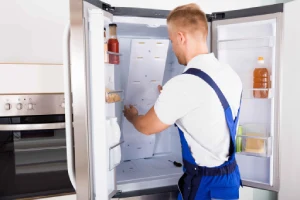
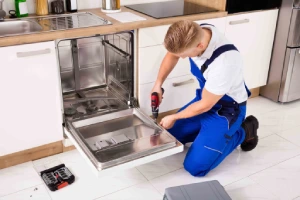
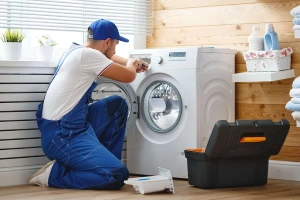
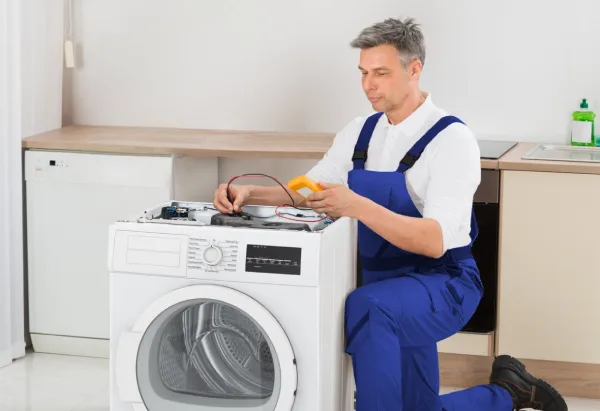
Admiral Fridge Repair
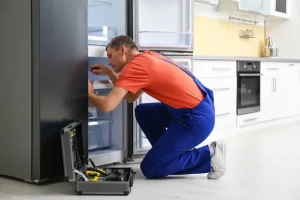
Admiral refrigerators are basic top-freezer and all-refrigerator units with a mechanical cold-control thermostat — most have no digital display or fault codes, so diagnosis is by component test, not a code readout. A unit that runs but won’t cool is very often a failed condenser fan (the compressor can’t reject heat) rather than the compressor itself.
Frost buildup and a warm box point to the defrost heater or timer; we test heater continuity (spec ~25–30Ω) and the cold control. Ice-maker faults use the standard Whirlpool modular head, which we test and swap as a unit.
Common issues we fix:
- Runs but won't cool (condenser fan)
- Warm box with heavy frost (defrost heater/timer)
- Compressor not starting (start relay)
- Ice maker not filling or harvesting
- Cold-control thermostat failure
- Door gasket worn, condensation inside
- Evaporator fan noise or stall
- Water pooling from a blocked drain tube
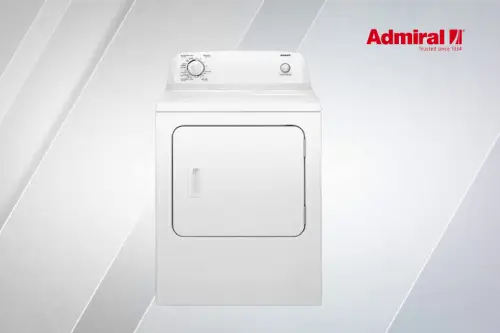
Admiral Dryer Repair
Admiral dryers are Whirlpool-platform machines, so a no-heat call is usually a blown thermal fuse behind a lint-restricted vent — the dryer shows AF (restricted airflow) as it heads that way. We confirm the thermal fuse, heating element, and (on gas models) the igniter and coils together.
An L2 means one 240V leg is missing, so the drum turns but there’s no heat — a house-supply or cord issue we check at the outlet. A PF is just a power-failure interruption. We always clear the exhaust duct, since airflow drives most Admiral dryer faults.
Common issues we fix:
- AF restricted airflow / long dry times
- No heat (thermal fuse or element)
- L2 low/no line voltage, drum turns but no heat
- Gas igniter not glowing
- PF power-failure interruption
- Drum not turning / belt failure
- Squeal or thump from rollers
- Moisture sensor not ending the cycle
Admiral Washer Repair
Admiral washers are Whirlpool-platform top-loaders and front-loaders. An LF long-fill points at the inlet valve or low pressure, LdL/LdU are lid-lock faults that stall the cycle, and drn is a drain problem — almost always a blocked pump or filter, not a dead motor.
A top-loader that agitates but won’t spin usually has a failed shift actuator; we test the actuator solenoid and the lid lock before replacing parts. An Ofb out-of-balance or Sud excess-suds code is usually load or detergent, which we confirm before condemning anything.
Common issues we fix:
- LF long fill / won't fill
- LdL / LdU lid won't lock or unlock
- drn won't drain
- Agitates but won't spin (shift actuator)
- Ofb out-of-balance shaking
- Sud excessive suds
- Leaking from pump or hoses
- Won't start / lid switch fault
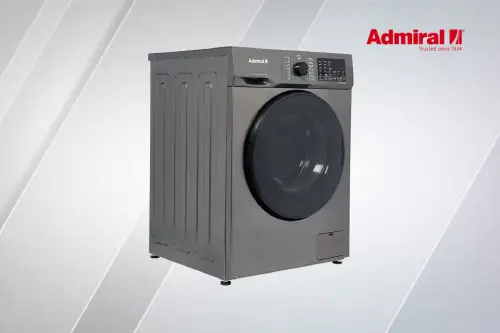
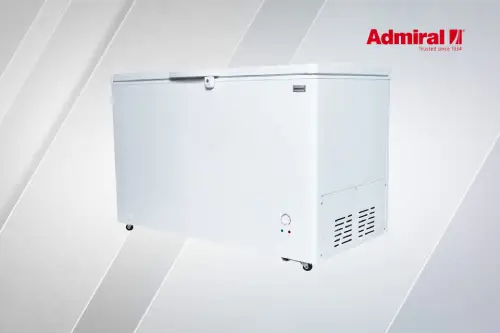
Admiral Freezer Repair
Admiral chest and upright freezers are mechanical units where a warm cabinet usually traces to the compressor start relay/overload or the cold-control thermostat rather than a sealed-system leak. We test the relay and windings before assuming the worst.
Heavy frost on a manual-defrost model is often just usage or a worn lid gasket; we check the gasket seal and, on frost-free models, the defrost heater and thermostat.
Common issues we fix:
- Not reaching temperature / food thawing
- Compressor relay clicking, won't start
- Heavy frost or ice buildup
- Lid or door gasket not sealing
- Runs constantly
- Defrost heater / thermostat failure (frost-free)
- Water pooling on defrost
- Temperature swings
Admiral Range & Stove Repair
Admiral gas and electric ranges are straightforward to service. On electric models, a bake element that reads open (spec ~20Ω) is the usual no-bake cause; on gas models, a weak oven igniter that won’t draw enough current to open the safety valve keeps the oven cold.
We measure the element or igniter and the oven temperature sensor directly, and recalibrate oven temperature after any heating-component swap so the range holds its set point.
Common issues we fix:
- Bake element not heating (open element)
- Gas oven won't heat (weak igniter)
- Surface burner won't light / keeps clicking
- Oven temperature inaccurate
- Range won't power on
- Control knobs or switches not responding
- Gas smell or weak flame
- Broiler not working
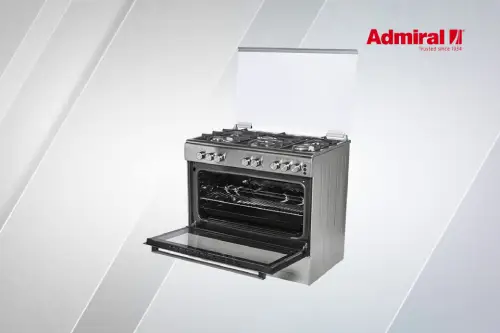
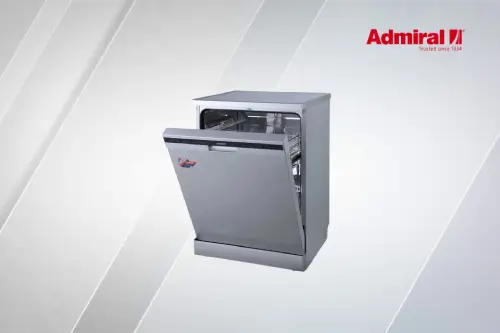
Admiral Dishwasher Repair
Admiral dishwashers are Whirlpool-platform units where the drain pump and filter are the usual trouble spots. A unit that fills but leaves standing water almost always has a debris-packed filter or a jammed drain-pump impeller rather than a failed motor.
We clear the sump and filter, test the pump current (~1.2A), and check the inlet valve and wash motor before recommending parts. On the basic models the control signals faults by blinking lights rather than a numeric code, so we read the blink pattern during diagnosis.
Common issues we fix:
- Fills but won't drain (filter / pump)
- Dishes cloudy or still wet
- Won't fill or fills slowly
- Spray arm not rotating
- Leaks at the door or base
- Door latch faults
- No heat / poor drying
- Blinking-light fault patterns
Admiral Oven Repair
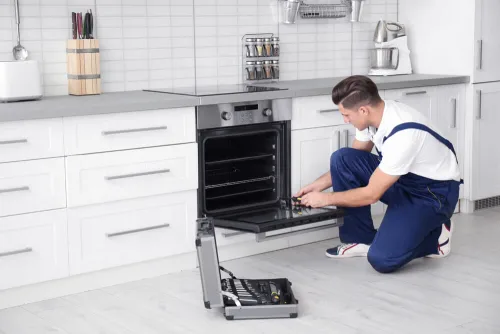
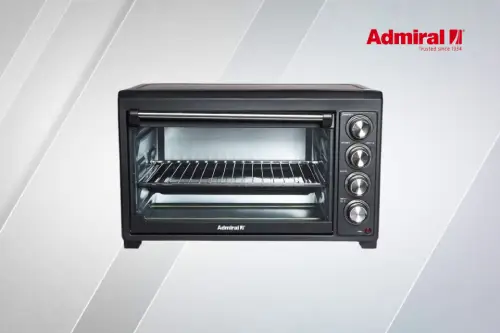
Admiral ovens — both the range oven and countertop models — that underbake or overbake usually have a failed bake element or a temperature sensor out of spec. We measure the element and sensor rather than replacing parts by elimination.
Door-hinge and gasket wear skew baking even when the element is fine; we check the element, sensor, and door seal together and verify temperature accuracy before finishing.
Common issues we fix:
- Not heating / slow preheat
- Baking too hot or too cold
- Bake element visibly damaged
- Broiler not working
- Temperature sensor fault
- Uneven baking or roasting
- Door won't close or seal properly
- Control knob or thermostat failure
Admiral Cooktop Repair
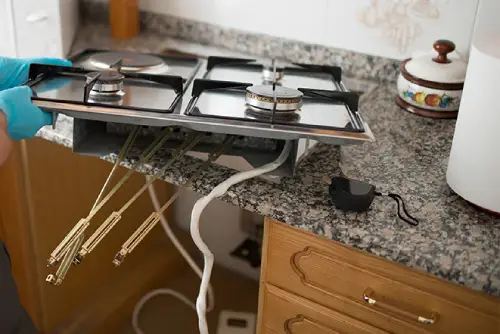
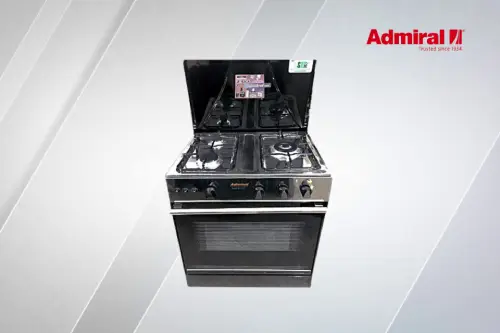
Admiral gas cooktops develop igniter and burner-valve faults: a burner that clicks but won’t light usually has a fouled igniter or a clogged burner port, while a burner that won’t regulate points at the valve. We clean, test, and replace the specific part rather than the whole assembly.
We verify safe gas flow and igniter operation on every burner before returning the cooktop to service.
Common issues we fix:
- Burner won't ignite / keeps clicking
- Weak or uneven flame
- Burner won't regulate (valve fault)
- Clogged burner ports
- Gas smell at the cooktop
- Igniter clicking that won't stop
- Knob or switch not responding
- Surface element not heating (electric)
Common Admiral Error Codes
Admiral’s washers and dryers use the Whirlpool code set; its basic refrigerators and freezers are mechanical and show no codes. Reading the laundry code before we arrive lets us bring the right part and finish most Admiral washer repair jobs in one visit.

Admiral washer error codes
| Code | Meaning |
|---|---|
| LF / Lo FL | Long fill — washer taking too long to fill (inlet valve, low pressure, or reversed hoses) |
| LdL | Lid will not lock |
| LdU | Lid will not unlock |
| drn | Not draining properly — check drain pump and hose |
| Sud | Excessive suds — too much or wrong detergent |
| Ofb | Load out of balance |
Admiral dryer error codes
| Code | Meaning |
|---|---|
| AF / F4E3 | Restricted airflow — lint screen or vent clogged, crushed, or kinked |
| L2 | Low or no line voltage — a supply leg is missing, so the heater won't turn on |
| PF | Power failure — the drying cycle was interrupted by a power loss |
| F# E# | Control has detected a fault that requires service |

The codes above are the ones we see most. Admiral’s basic refrigerators, freezers, and dishwashers signal faults through mechanical behavior or blinking lights rather than numbered codes — call us with what your appliance is doing and we’ll confirm whether an Admiral dryer repair or the relevant service applies.
Technician Case Studies — Admiral Repairs

Diagnostic & Resolution: Measured lid lock actuator solenoid resistance — read open-circuit (spec 500–1,000Ω). Replaced lid latch assembly. Ran five consecutive wash cycles confirming clean lid-lock engagement and spin cycle reaching full RPM.
Diagnostic & Resolution: Removed drain pump filter — filter completely packed with food residue. Cleaned filter and pump inlet screen; confirmed pump motor draws rated current at 1.2A. Clean drainage in under 90 seconds verified on two consecutive test cycles.
Diagnostic & Resolution: Measured bake element resistance — read open-circuit (spec ~20Ω). Replaced bake element. Confirmed oven reaching 350°F in under 12 minutes; temperature maintained within ±15°F. Broil element verified unaffected on post-repair test.
Diagnostic & Resolution: Accessed condenser compartment — condenser fan motor failed open (0.0A draw). Without condenser fan, compressor could not reject heat effectively. Replaced condenser fan motor. Cabinet temperature returned to set point within 3 hours.
Diagnostic & Resolution: Tested motor shift actuator solenoid resistance — open-circuit (spec 500–1,000Ω). Actuator unable to engage spin clutch. Replaced shift actuator assembly. Spin cycle confirmed reaching rated RPM and clothes properly extracted on post-repair test.
Diagnostic & Resolution: Measured thermal fuse continuity — open-circuit (indicating prior overheating). Inspected exhaust duct — 60% restriction from lint at exterior vent transition. Replaced thermal fuse (WP3392519), cleared duct. Drying time confirmed at 45 minutes for cotton load.
For Admiral dryer repair or any other appliance service, call (917) 997-5264. We offer same-day appointments and a full service warranty on all work.
What Our Clients Say
Frequently Asked Questions — Admiral Appliance Repair
What Admiral appliances do you repair?
My Admiral washer shows LF — what does that mean?
Is Admiral the same as Maytag or Whirlpool?
What Admiral problems do you fix most often?
How much does Admiral appliance repair cost?
Address
Brooklyn, NY 11238
Manhattan, Staten Island
Appliance Repair
Payment Options